I keep a drawer of dead opener parts in my Tulsa shop. Every piece in it is tagged with the date it came out and the machine that killed it: stripped plastic gears from a chain unit sold as heavy duty, a belt with a glazed flat spot where it rubbed a rail that was never squared, three photo-eyes that died because somebody backed a truck into the bracket. Twelve years and more than 200 opener swaps later, that drawer is the only spec sheet I actually trust.
So when I line up four smart garage door openers for a comparison, I am not ranking them by how pretty the app looks on a phone. I am ranking them by what is still working in year seven, and by whether the thing can open the door when the power is out and the sky over Tulsa is green.
Related: Belt Drive vs Chain Drive Garage Door Openers
The short answer: for a house with a bedroom above the garage, buy the Chamberlain belt drive myQ with battery backup. If your ceiling is precious or your door is tall, go wall mount and take the Chamberlain wall mount myQ with battery backup. The Genie QuietLift Connect is the value pick if you can live without battery backup, and the Genie wall mount is the one for a shop door that runs up to 14 feet.
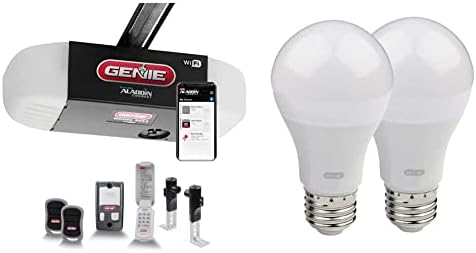
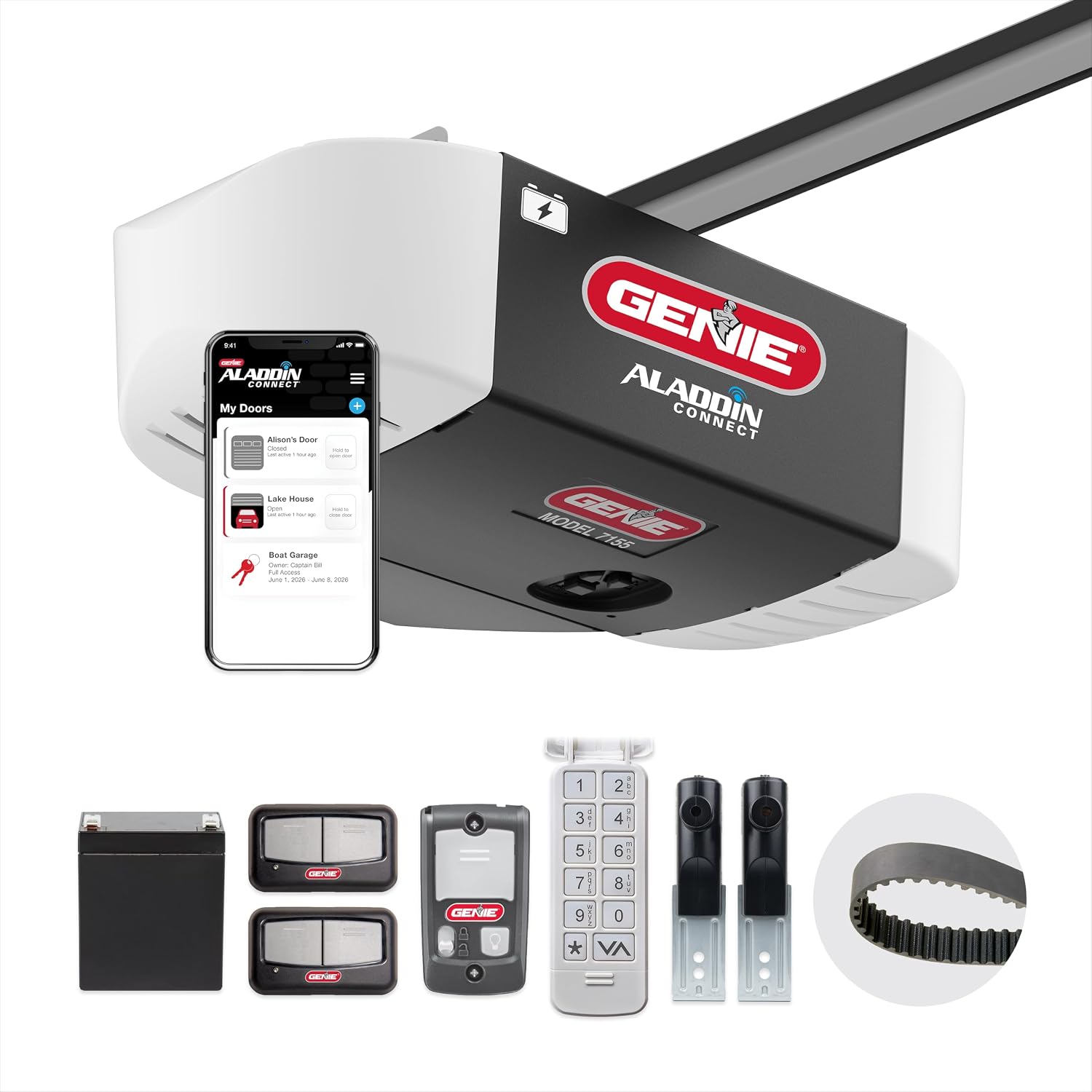
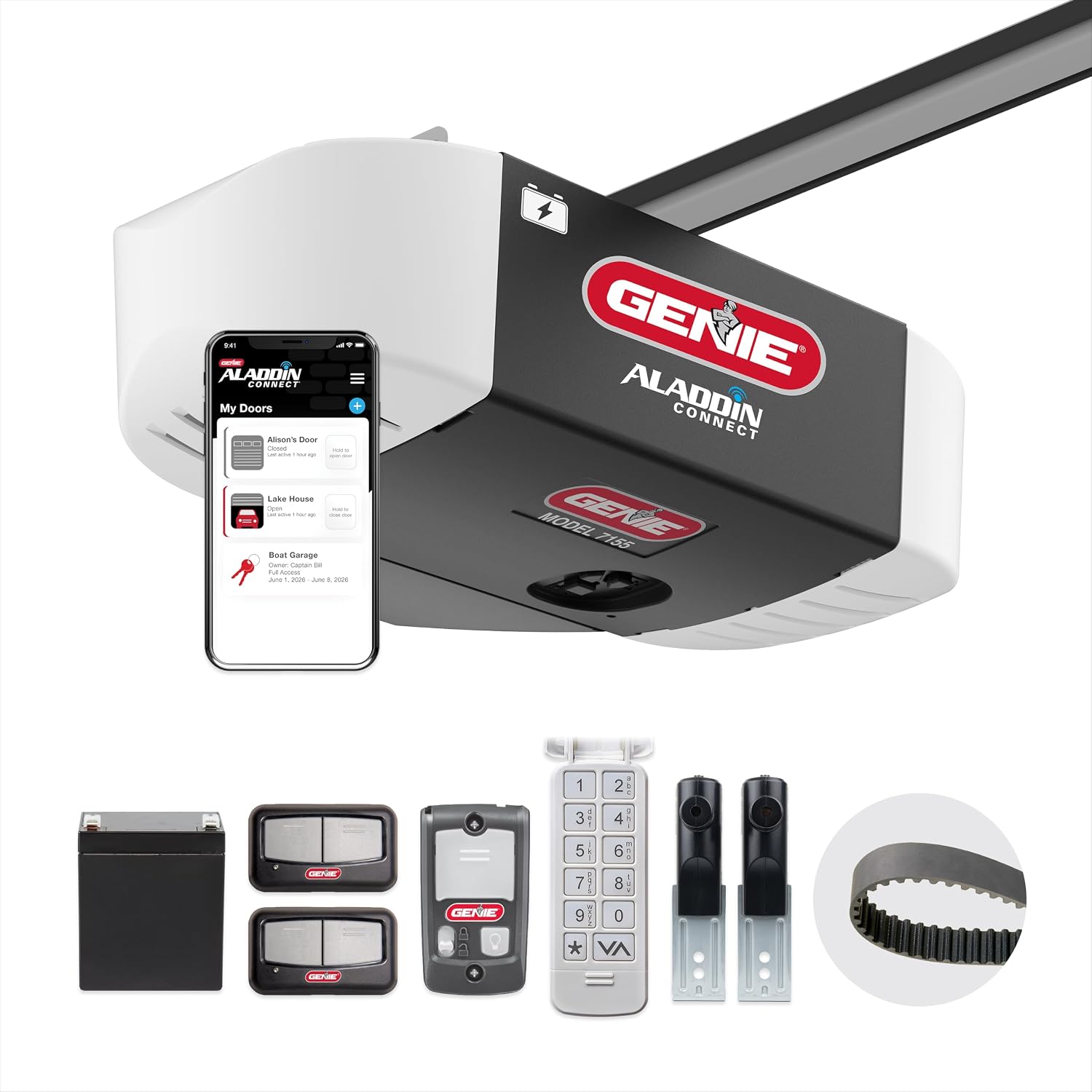
Genie QuietLift Connect 3053-TKV
Belt drive, 3/4 HP, wireless keypad included, Wi-Fi with Alexa and Google Assistant
No battery backup in the listed spec
Genie B6172H Wall Mount
DC motor wall mount rated for doors up to 14 ft and 850 lb, clears the entire ceiling
No battery backup listed, and wall mount needs a torsion setup
Chamberlain Wall Mount myQ
Wall mount plus battery backup, the combination I want in a shop
Wall mount install rules out a lot of older doors
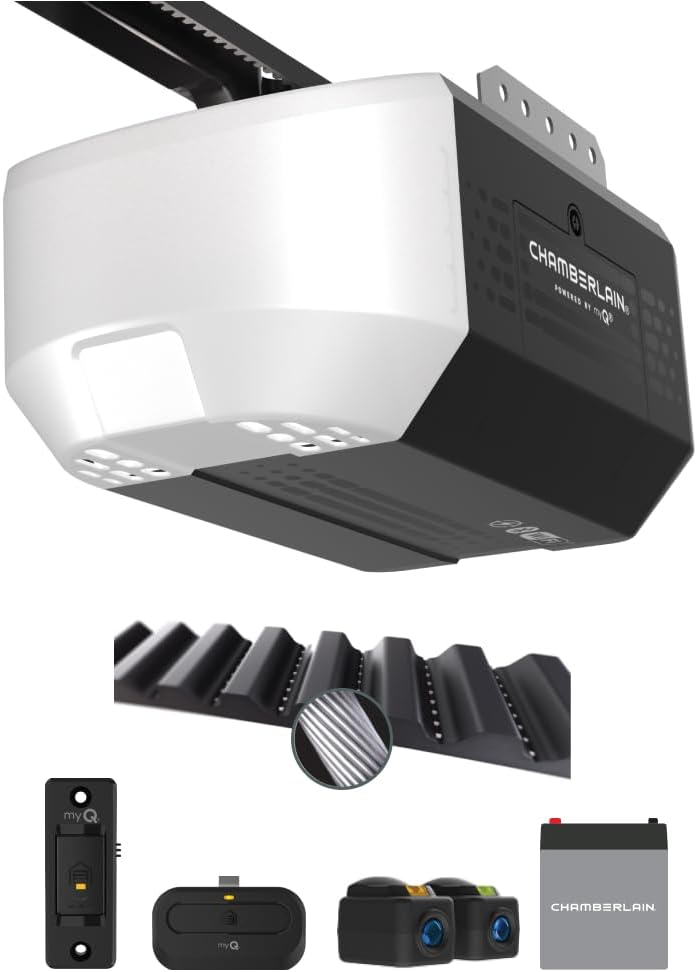
Chamberlain Belt Drive myQ 1/2 HP
Belt drive plus battery backup, myQ app
1/2 HP is the lowest rating in this group
Prices and availability were captured from Amazon Creators API and may change.
What actually fails first
Almost nobody loses an opener to a burned-out motor. I have replaced motors, sure, but they are the minority of the drawer. What kills these machines is everything bolted to them.
Door balance comes first. An opener is built to move a door that a ten-year-old could push up with one hand. When the springs sag or the door goes out of balance, the opener starts doing the lifting, and that load goes straight into the gears and the rail. Stripped gears are a symptom. The disease is a door that weighs 40 pounds more than it should at the halfway point.
Second is rail alignment. A rail that is not square to the header bracket makes the trolley drag on one side of the channel. On a belt unit that shows up as a shiny glazed stripe on the belt edge. On a chain unit it shows up as noise and then as a snapped link in the first cold snap of January. I have pulled rails out of ceilings that were out of level by more than an inch across a seven-foot span. That opener was never going to make it to year ten.
Third is the photo-eye and the travel limits. Travel limits drift after a power outage on plenty of units, which means the opener thinks the door is closed when it is six inches up. And the photo-eye is the most abused part on the whole assembly. If the sun hits one eye at the right angle in the late afternoon, the door reverses for no reason that makes sense to the homeowner. Nine times out of ten it is alignment, not a bad sensor.
None of that changes with the brand name on the box. It changes with how well the thing was installed.
Belt drive versus wall mount: the trade-off nobody explains
Belt drive units hang from the ceiling with a rail and a trolley, same as a chain unit, but a steel-reinforced belt runs instead of a chain. That belt is the whole reason to pay the extra money. If you have a bedroom above the garage, belt drive is not a luxury, it is sleep. A chain unit transmits every roller rumble straight into the ceiling joists, and a belt absorbs most of it. The Genie QuietLift Connect and the Chamberlain belt drive myQ are both belt units, and both are the right shape for a house with living space over the garage.
Wall mount is a different animal. It bolts to the torsion shaft side of the door and drives the shaft directly, so there is no rail, no trolley, and nothing hanging over your head. That buys you two things. First, the ceiling. If you park a truck under the opener or you have a lift or a lot of overhead storage, a wall mount gives it back to you. Second, tall doors. The Genie wall mount is rated to lift doors up to 14 feet high and 850 pounds, which is shop and RV bay territory that a standard ceiling-mounted rail unit is not built for.
The cost of going wall mount is the install. It needs a torsion spring system with a shaft it can clamp to, an outlet near the door, and a door that is properly balanced, because a jackshaft unit has no mechanical advantage to hide behind. If your door runs extension springs, a wall mount is not an option without changing the hardware. That rules out a lot of older Tulsa garages, and it is the single biggest reason I still sell belt rail units more often than wall mounts.
Battery backup is not a gimmick in Oklahoma
I have stood in a garage after a storm with no power for two days, and the car inside was the only way out of the neighborhood that did not involve walking. That is the argument for battery backup, and it is not a small one. It is also the reason two of the four units in this comparison list battery backup in the spec: the Chamberlain wall mount myQ and the Chamberlain belt drive myQ.
The Genie QuietLift Connect and the Genie wall mount do not list battery backup. That does not make them bad openers. It makes them openers you should only buy if you already have a plan for the power going out, or if you live somewhere that does not lose power in the spring.
There is a catch nobody mentions at the counter. The battery in a garage opener lives in the hottest room of your house. A Tulsa garage in August will sit well above 100 degrees for weeks, and heat is what kills batteries. My current focus is exactly this: whether the newer battery-backup openers actually survive a summer out there, or whether the pack is a two-year consumable. If you buy a unit with battery backup, test it twice a year. Unplug the opener, run the door, plug it back in. A dead battery you find in a storm is worse than no battery at all, because you were counting on it.
The smart part is 10 percent of the product and 90 percent of my phone calls
I have reset more Wi-Fi modules than motors, and it is not close.
Here is the honest breakdown of the smart features on these four. The Genie QuietLift Connect runs on Wi-Fi and works with Alexa and Google Assistant, and it ships with a wireless keypad in the box. The keypad is the underrated part. For a house with kids or a house with a cleaning crew, a keypad code is worth more than every app feature combined, because it works when the phone is dead and it works for people who do not live there.
The Chamberlain units run myQ, which is the most widely supported smart garage platform, and that matters for parts and for integrations. It also means the door lives behind an account. I have had clients ask me why they need a cloud login to open a door that is fifteen feet from their router. That is a fair complaint, and it is the one thing I would change about the whole category.
Two pieces of advice that save people real grief. Set up the app while you are standing in the garage with the door in front of you, not from the couch. And keep a plain remote in the car anyway. Remotes that live in a visor die in the heat, but a remote in the console beats an app that will not load when the cell network is congested.
Install day: where the DIY jobs go wrong
The opener is the easy part. The door is the hard part.
Before you touch a box, disconnect the old opener and lift the door by hand to the halfway point. Let go. A balanced door stays put. If it slams down or floats up, stop and call a pro, because you are about to adjust springs, and springs are the one part of this job that will kill you. That is not drama, it is the boundary I hold on every job I take.
Once the door is balanced, the order is this. Assemble the rail on the floor and get it straight, because you cannot fix a bent rail from a ladder. Set the header bracket at the height the manual calls for, centered over the door. Hang the unit, then set travel limits with the door connected, then test safety reverse by laying a piece of 2x4 flat in the door's path. The door should reverse on contact. If it does not, the limits are wrong, and you fix it before you ever walk away from that garage.
Then align the photo-eyes. Both lenses at the same height, both aimed at each other, and check them at the time of day when the sun comes in sideways, because that is when a marginal alignment shows up as a phantom reversal.
The mistake I see most often is not reading the manual for the header bracket height. Homeowners hang the unit where the old one was, and the old one was wrong. That is how you end up with a rail that is fighting the door every cycle.
Which opener for which house
Match the unit to the house, not to the sale price.
- Bedroom above the garage, standard door: Chamberlain belt drive myQ 1/2 HP with battery backup. Belt for quiet, battery for the storm, myQ for the app.
- Same house, budget is tight and you have a generator: Genie QuietLift Connect 3053-TKV. Belt drive, 3/4 HP, keypad in the box, and no battery you have to maintain.
- Shop or RV bay with a tall door: Genie B6172H wall mount. Rated to 14 feet and 850 pounds, and it gets the ceiling out of your way.
- Two-car garage where you want the ceiling back and the battery too: Chamberlain wall mount myQ with battery backup, if your door runs torsion springs.
- Detached garage you do not heat or cool: Honestly, a chain unit is fine out there. Nobody is sleeping above it.
Questions I get every week
Is belt drive really quieter than chain? Yes, and it is not subtle. The belt absorbs the vibration the chain passes into the framing. If you sleep above the garage, this is the decision that matters most.
Do I need battery backup? If you live where storms take the grid down, yes. Your car is the emergency exit, and a dead opener means a dead exit.
Can I install a wall mount myself? If your door has a torsion shaft, an outlet nearby, and you are comfortable with the geometry, yes. If you have extension springs, no, and that is a hardware problem, not a skill problem.
Which one is quietest? Both belt drive units here are belt drive. Between a belt rail unit and a wall mount, the wall mount has the edge on paper because there is no rail and no trolley to rattle, but the difference is smaller than the difference between belt and chain.
What I am watching next
Three things, and I score them every January. Whether the lithium packs in the battery-backup units hold up through a Tulsa summer or cook themselves into two-year consumables. Whether local control, meaning an opener that does not need a cloud login to move a door fifteen feet away, finally shows up in this price range. And whether belt drive finishes off chain at every price point, because the cost gap is nearly gone and the noise argument never went away.
Until then, balance the door before you buy anything, buy the belt if you sleep over the garage, and buy the battery if the sky turns green where you live.