I keep a drawer in my Tulsa shop full of failed opener parts, each one labeled with the date it came out and the unit it came out of. Stripped plastic gears from a "heavy duty" chain unit. A belt that outlived two motors. Three photo-eyes that went blind every afternoon when the sun hit the west wall. After twelve years and more than 200 replacements for neighbors and clients, that drawer is the only review file I trust. So when somebody asks me for a smart garage door opener recommendation, I ask two questions before I name a product: how old is the opener you already have, and is the door balanced?
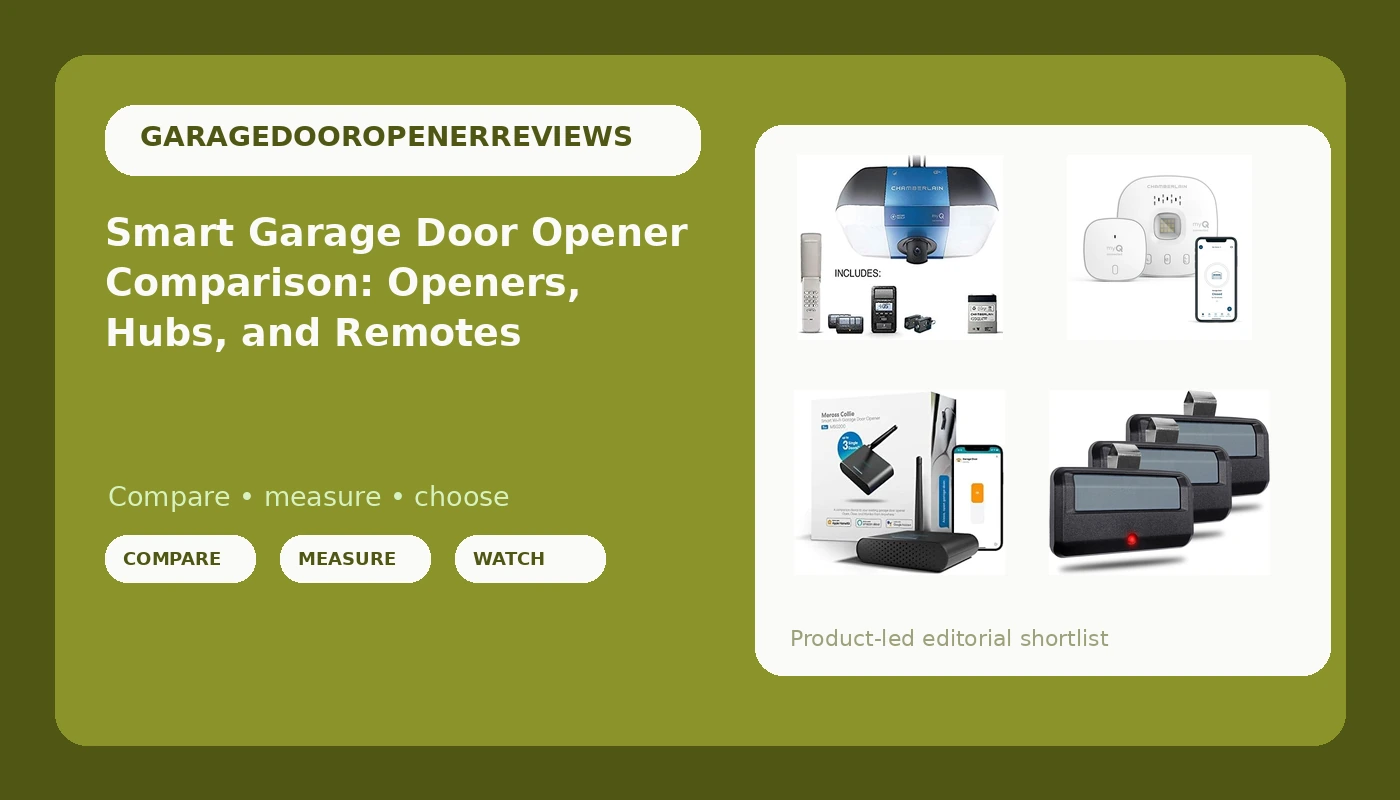
That second question is the one nobody wants to answer. It is also the reason a $200 opener dies in five years while a $150 one runs for fifteen. This comparison covers four very different purchases that all get filed under "smart garage door opener" in a search bar: a complete belt-drive opener with battery backup and a camera, a retrofit hub that makes an old opener smart, a Wi-Fi remote module with an external antenna, and a three-pack of plain remotes. They are not competitors. They are four answers to four different problems, and buying the wrong one is how you end up in my driveway with a door stuck open.
Related: Belt Drive Vs Chain Drive Garage Door Openers
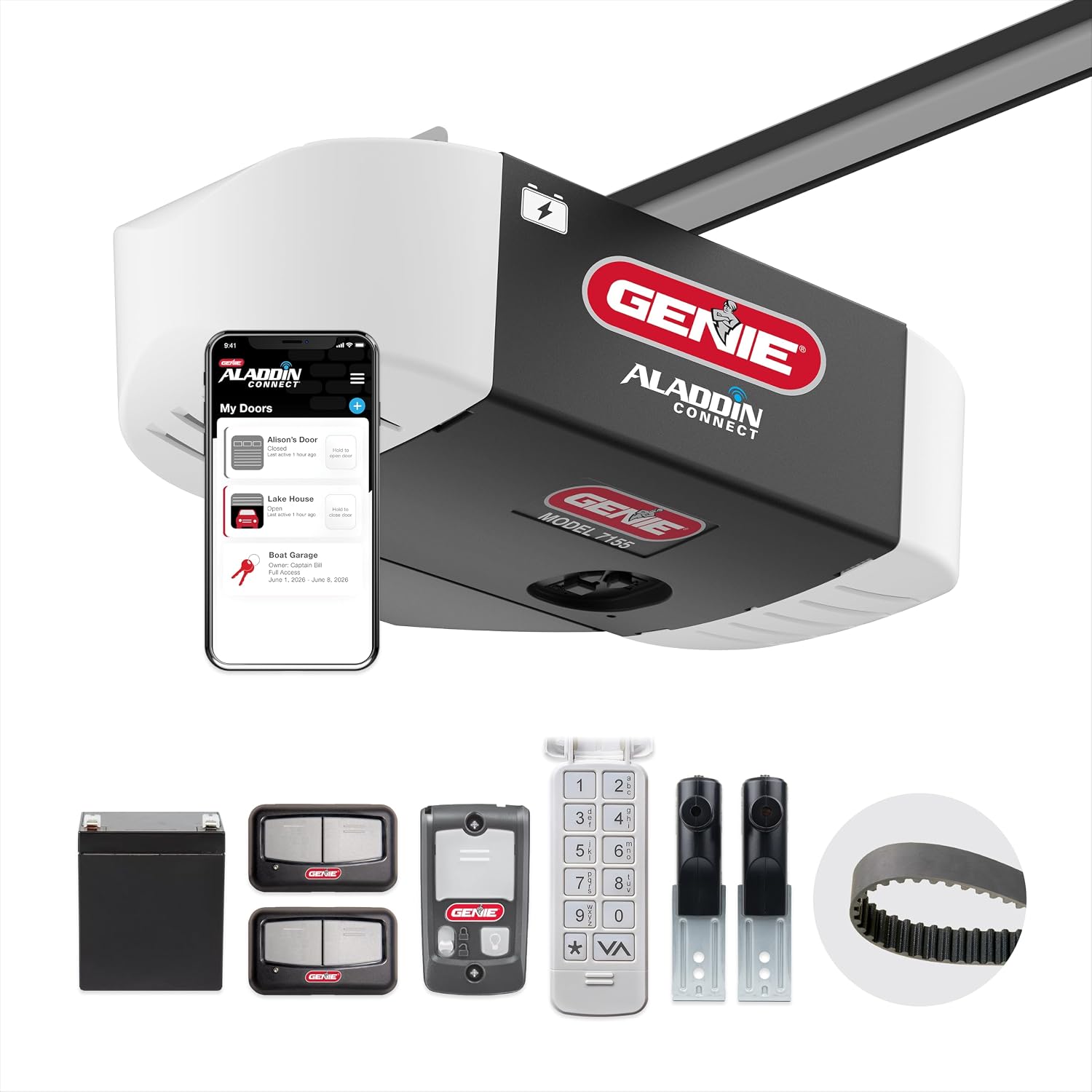
Chamberlain B6765T Smart Garage Door Opener with Built in HD Camera, Battery Backup and LED Lighting
Belt drive, battery backup, camera, LED lighting and a wireless keypad in one box. The only pick here that replaces a dying opener instead of patching it
Highest cost of the four, and it only makes sense if your current opener is actually on the way out. The smart module is the part that generates support calls
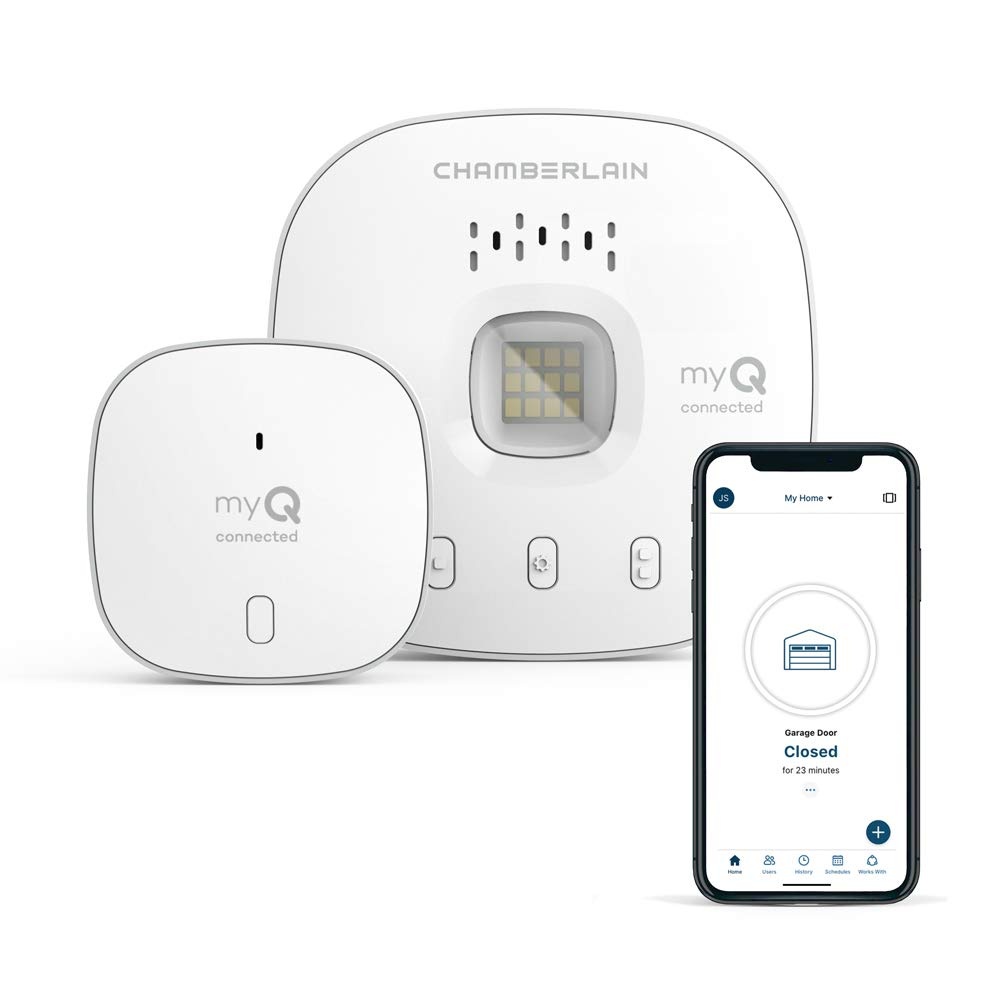
Chamberlain Smart Garage Control, Wireless Garage Hub and Sensor with WiFi and Bluetooth
Turns an opener you already own into a phone-controlled door for a fraction of a new unit. Wi-Fi and Bluetooth, works with the myQ app
It cannot fix a worn belt, a stripped gear, or a door that is out of balance. It also leans on a cloud login, which is the single most common complaint I hear
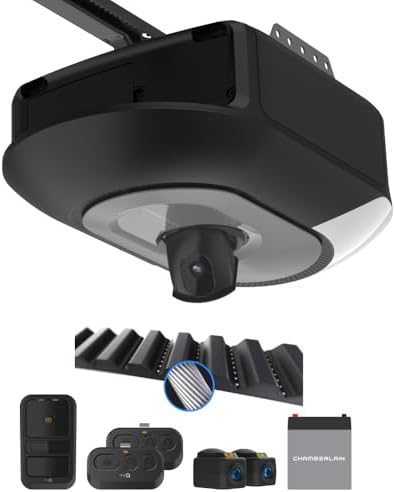
meross Smart Garage Door Opener Remote with External Antenna
The external antenna is the whole story. For a detached garage or a metal-clad shop, signal is the problem, not the opener
Less polish than the big-brand ecosystem, and it is still an app on your phone. Not a fix for a mechanically tired opener
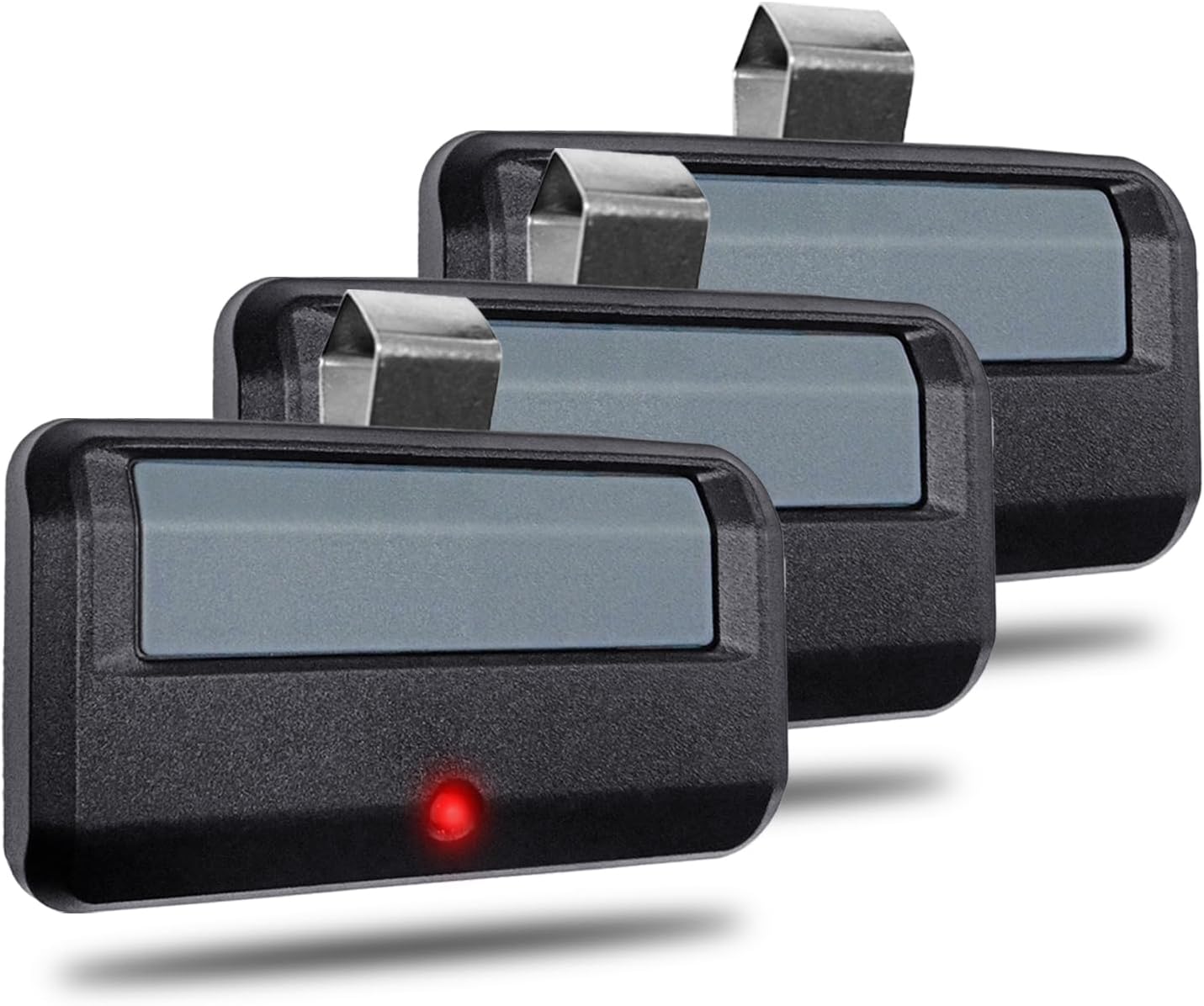
3 for Chamberlain LiftMaster Craftsman Garage Door Opener Remote
The cheapest honest fix in this entire category. If your remotes died in the visor heat, this solves it today
Adds zero smart features. Compatibility still depends on your opener's frequency and learn button, so check before you order
Prices and availability were captured from Amazon Creators API and may change.
Start with the door, not the box
Before you spend a dime on any of these, walk out to the garage, pull the release cord, and lift the door by hand. It should rise with two fingers and stay where you put it, three feet off the floor, without drifting. If it slams down or floats up, the springs are carrying the wrong load, and no opener on this list will survive it. That is not an opinion. That is the failure mode I have pulled out of that drawer more times than any other.
While you are there, check the photo-eye alignment and the safety reverse. Put a two-by-four flat on the floor in the door's path and run the door down. If it does not reverse, stop and fix that before you think about Wi-Fi. A smart opener on a door that will not reverse is a liability with an app attached. And if the springs themselves are broken or visibly stretched, call a pro. I do not give spring advice and neither should anyone in a comment section. That is lethal work.
If the door is balanced and the safety reverse works, you have a real choice to make, and it comes down to whether your existing opener is healthy.
The complete opener: belt drive, battery backup, and a camera
The Chamberlain B6765T is the pick when the opener you have is done. Not tired, done. Gears howling, travel limits that will not hold after a power outage, a rail that has been shimmed twice already. At that point you are not buying smart features, you are buying a new machine that happens to be smart.
What I like about this one is the belt drive. I have said it for years and I will keep saying it: if there is a bedroom above your garage, belt over chain, every time. The price gap that used to justify chain has basically closed, and chain noise travels through a house like a drum solo. The B6765T also carries battery backup, which matters more here in Oklahoma than almost anywhere. When an ice storm takes the grid down, the garage is your emergency exit, and an opener with a battery in it keeps that exit working. That is the feature I would pay for first.
The built-in HD camera and the LED lighting are the parts I am more skeptical about. A camera in the garage is genuinely useful if you want to see whether the door is open or who pulled in, and the LED panel means you can retire the bare bulb hanging from a rafter. But every smart feature you add is another thing that can need a reset. I have reset more Wi-Fi modules than motors, and it is not close. The wireless keypad in the box is the quiet hero here, because a keypad works when the app does not.
If you are replacing a dead opener and you want the whole job done in one purchase, this is the one that does it. Just budget the install honestly. I charge $150 to $250 for a replacement, and the DIY version is doable, but 80 percent of the homeowner installs I get called to fix have the rail wrong. Follow the manual's rail assembly steps to the letter, and set your travel limits with the door connected, not before.
The retrofit hub: smart control without a new opener
Here is the scenario I run into most often. The opener is 12 years old, the belt is fine, the gears are fine, the door is balanced, and the homeowner wants to open it from a phone. Replacing that unit is a waste of money, and this is where the Chamberlain Smart Garage Control earns its place. It is a hub and a sensor. You mount the sensor on the door, wire the hub to your existing opener, and your phone becomes a second remote.
The win is obvious: you keep a working opener and add the one feature you actually wanted. The hub uses Wi-Fi and Bluetooth, and the sensor tells you whether the door is open or closed instead of guessing. For a family where somebody always leaves for work wondering if they shut the door, that status alone is worth the purchase.
The loss is the app. This is my biggest pet peeve in the whole category, and it is not unique to this brand. Too many of these systems want a cloud login before they will open a door that is sitting ten feet from your router. I have stood in a client's garage with a perfectly good Wi-Fi signal and a phone that refused to cooperate because a server somewhere was having a bad afternoon. Set the system up while you are calm, save your credentials somewhere you will find them, and keep a plain remote in the car as a fallback. The hub is a convenience, not a life support system.
One more thing: the hub will not fix mechanics. If the door groans, binds, or reverses on its own, adding a smart hub just gives you a fancier way to watch a broken door.
The antenna option: meross for detached garages
The meross Smart Garage Door Opener Remote is the pick for the house where the garage is not attached, or the shop out back, or anywhere the Wi-Fi signal dies before it reaches the door. The external antenna is the entire reason to choose it over the hub. I have dealt with enough metal-clad outbuildings to know that signal, not software, is usually the problem, and a module with an antenna you can position away from the housing is a practical answer.
It wires to an opener you already own, just like the hub, and it gives you phone control over the door. For a detached garage, that beats a new opener purchase by a wide margin, and it beats a hub that keeps dropping off the network.
What you give up is ecosystem polish. This is a smaller player, and you should expect a simpler app and fewer integrations than the big brand offers. It is also still an app, so the same rule applies: keep a physical remote in the car. If your priority is a reliable link to a faraway door rather than a pretty dashboard, the antenna makes this the better retrofit. If your garage is attached and your router is close, the hub is the smoother path.
The cheap fix: three remotes
Sometimes the whole problem is that the remotes are dead. Visor heat kills them, kids lose them, and the one in the truck has been through the wash twice. The three-pack of remotes for Chamberlain, LiftMaster, and Craftsman openers is the least glamorous product in this article and the one I recommend most often.
Three remotes for less than the cost of a single dealer replacement is a genuine bargain, and if your opener is otherwise healthy, this is where you should start. Program one for each vehicle, keep one in the kitchen drawer, and stop sharing a single fob between two cars.
The catch is compatibility. These remotes work with a long list of openers, but not every opener ever made. Find the learn button on your opener's motor head and note the color, and check the frequency before you order. If your opener is a much older unit with a different scheme, this is not your fix. Also, if your remotes keep dying every summer, that is a sign the opener's receiver board is drifting, and at that point you are better off putting the money toward the retrofit hub or a new opener.
What I would buy for three different houses
For the house with a dead opener, a bedroom above the garage, and a family that needs the door to work when the power is out: the Chamberlain B6765T, installed with the rail assembled exactly per the manual and the travel limits set on a balanced door. Belt drive for quiet, battery backup for storm season, and the keypad for the days the app misbehaves.
For the house with a healthy 10-year-old opener and a homeowner who just wants phone status: the Chamberlain Smart Garage Control hub. It is the cheapest way to make a good opener smart, and it tells you whether the door is open instead of making you guess.
For the detached garage or the metal shop at the end of a long driveway: the meross module with the external antenna. Signal is the battle there, and the antenna is how you win it.
For the house where everything works and the remotes are just dead: the three-pack, today, for less than a tank of gas.
And in every one of those houses, the door gets balanced and the safety reverse gets tested before anything gets plugged in. The motor is the least important part of this decision. I have said that to more homeowners than I can count, and I have never once been wrong about it.
What I am watching next
Battery backup is going to be standard equipment in this category within a few years, because extreme weather is not getting gentler and a garage door is an exit. I am also watching for local control to become a selling point again, because the homeowners who call me are tired of needing a server to open their own door. The brands that figure out a garage that works on your own network, without a login, will take the privacy-minded buyers. I will score that prediction in January, same as every year.