Related: Best Garage Door Opener for a House With a Bedroom Above the Garage
A universal garage door opener remote is the cheapest fix in this whole business, and it is the one people get wrong most often. They buy the wrong frequency, they buy a remote for a brand they do not own, or they buy one that pairs fine in the driveway and quits after two Tulsa summers baking on a visor. Then they call me and blame the opener.
I have been replacing and repairing openers for neighbors and clients around Tulsa for twelve years, more than 200 units. I keep a drawer of failed parts, each one labeled with the failure date and the opener that produced it. The drawer is mostly remotes. Not motors. Remotes, photo-eyes, and one stripped carriage after another. The motor is the least important part of the system, and the remote is the part you touch every single day.
What actually matters when you buy one: the frequency and the rolling-code generation your opener speaks, whether the buttons are findable by feel in the dark, and whether the shell and the battery survive heat. Brand matters less than parts availability. That is where Chamberlain and LiftMaster earn their keep. The cheap brands are fine until something breaks, and then you wait three weeks for a part while the door sits open.
This guide covers three remotes and one mechanical part that keeps an old screw drive opener alive. All four are small money. All four are the difference between a door that works and a door you open by hand.
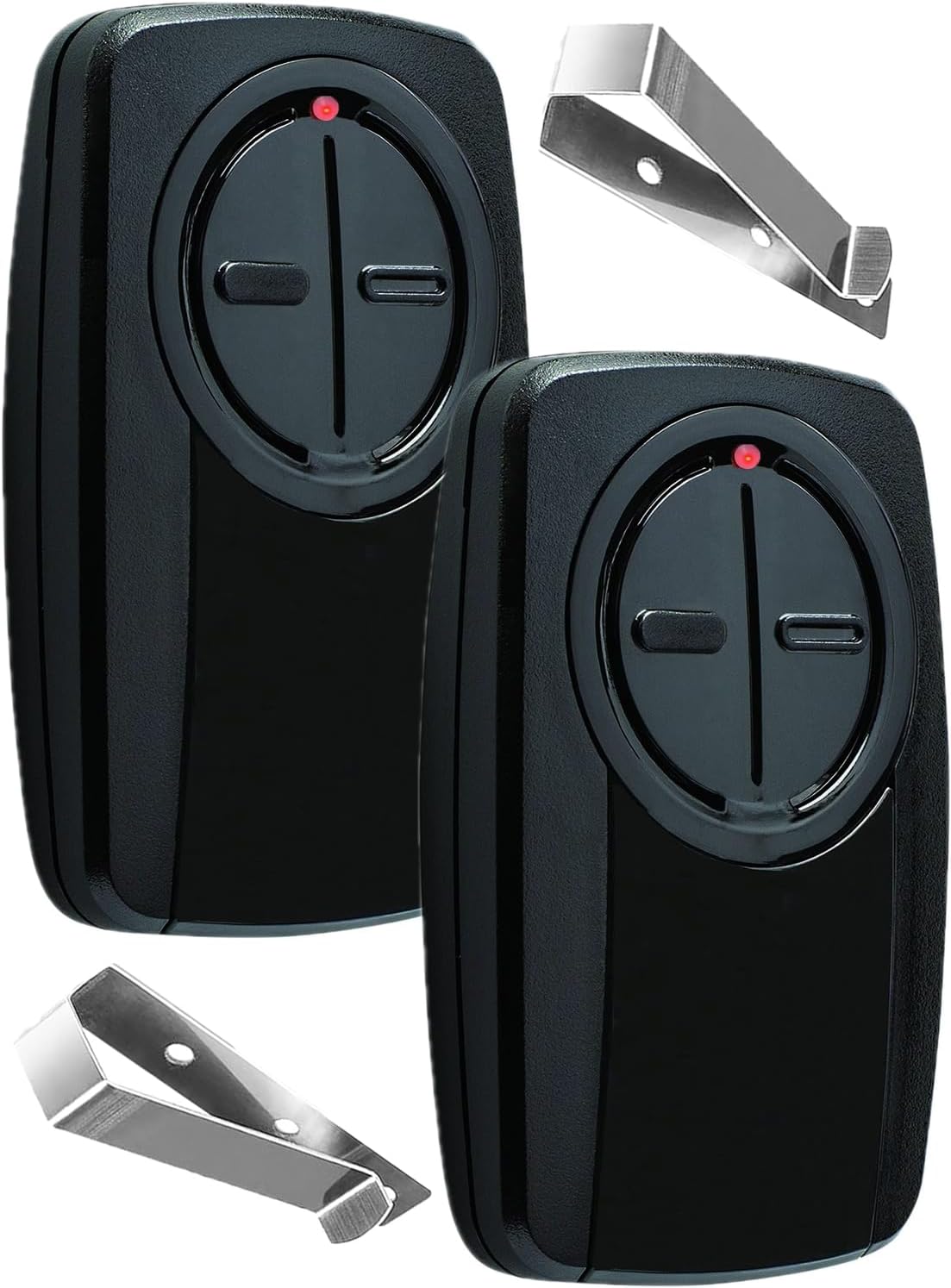
The Universal Remote I Hand Out Most: 380UT Chamberlain
The 380UT is the remote I keep in the truck because it is the one I can hand to almost anybody. It is sold as a universal replacement for Chamberlain, LiftMaster, and Craftsman openers, which covers the three brands I see in most Tulsa garages.
Three buttons matters more than people think. One for the main door, one for the second bay, one for the gate or the shop. If you have ever stood in the rain fumbling a single-button remote while your spouse backs out of the second bay, you know why three beats one.
Pairing is the part that scares people, and it should not. You press the learn button on the motor head, then hold the remote button until the opener clicks or the light blinks. If the door still does not move after that, the problem is almost never the remote.
What I like: the buttons are big enough to find with gloves on, and the shell does not feel like a cereal box toy. What I do not like: like every remote, it lives or dies by where you keep it. A visor clip in a truck parked in an Oklahoma summer is a slow execution. Console or door pocket, if you can manage it.
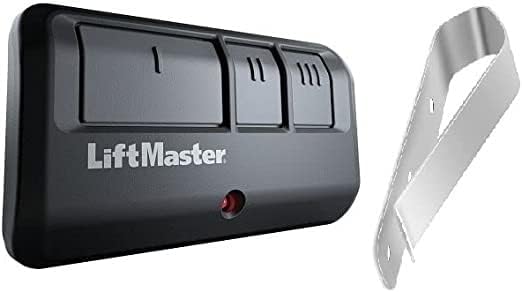
The Remote for LiftMaster Owners: Liftmaster 893LM
This is the brand's own three-button remote, not a universal replacement, and for some people that is the whole point. If your opener is a LiftMaster, this is the remote that pairs like it was born there, and it is the one I hand to the owner who does not want to think about compatibility at all.
Three buttons again, so main door, second door, gate. The difference is that you are buying into the same parts pipeline as the opener itself, which matters in year eight when you want another remote and the brand you bought from is still selling them.
Where it makes less sense: a property with a Chamberlain and a Craftsman on the same driveway, or a house where nobody knows what brand the opener is. That is universal remote territory. For a single-brand garage, this is the sure thing.
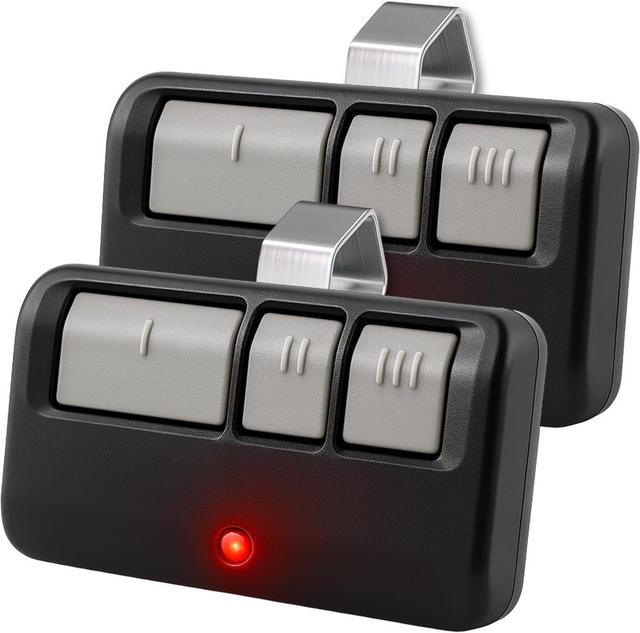
Two Remotes in One Box: Universal 2-Pack for the Big Three Brands
Sold as a pair of universal remotes for LiftMaster, Chamberlain, and Craftsman openers, and the math is simple: two cars, two remotes, one purchase. If you have ever had a remote die on a Tuesday morning with the car inside the garage, you already understand why a spare matters.
The other way to use this pack: one remote on the visor, one in the kitchen drawer. The drawer remote is the one that survives, because it never sees the heat.
Same pairing routine as any universal remote. Learn button on the motor head, hold the button, wait for the click. If you have two different brands in the same garage, confirm both openers are covered before you buy. Universal means universal within a family of brands and rolling-code generations, not universal across every opener ever made.
The Part That Saves an Old Screw Drive Opener: Genie Screw Drive Carriage
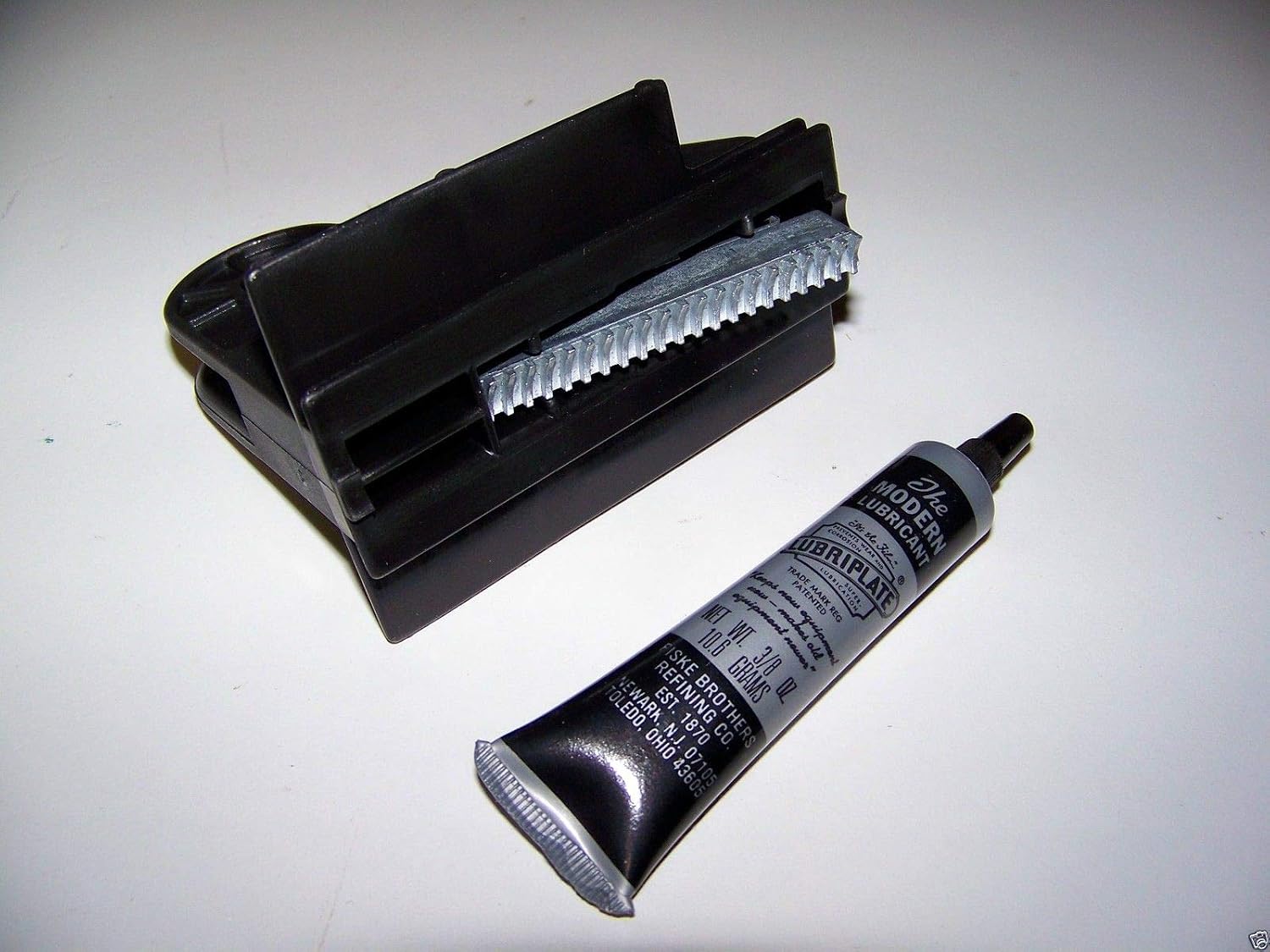
This is the one that is not a remote, and it is the one that saves you the most money. The carriage rides the screw and connects to the door arm. When it wears or strips, the motor runs, the screw spins, and the door does not move. Most people see that and buy a whole new opener. The carriage is a fraction of that.
It ships with lubricant, and that is not a throwaway extra. A screw drive that runs dry eats carriages for breakfast. If you are replacing the carriage, clean the screw and lubricate it while you are up there, or you will be back on the ladder next spring.
Two rules before you start. First, balance the door before you touch anything. Disconnect the opener, lift the door halfway by hand, and let go. A balanced door stays put. A door that slams down is a door that will eat your new carriage and your gears. Second, if the door is hard to lift by hand, the springs are the problem, not the carriage. Call a pro for springs. That is a lethal DIY and I will not walk anybody through it.
The part covers models 36179R and 34107R, which is the fitment you want to confirm against your opener before ordering.
How I check a remote before it goes in the truck
I pair it, I walk it to the far corner of the garage with the door closed, and I feel how the buttons press. That is the whole bench test. The rest is time and heat.
The failures I see over and over:
- Heat. A remote that lives on a visor in a hot car dies years before one that lives in a console. The battery swells, the membrane goes stiff, and the button stops making contact.
- Dropped remotes. The shell cracks at the clip, the battery door stops seating, and the contact goes intermittent. Intermittent is worse than dead, because you keep believing it will work.
- Dead batteries at the worst moment. A spare in a drawer solves that permanently for a few dollars.
- Worn carriages and dry screws. Mechanical, and the fix is cheap if you catch it before the gears go.
What I do not blame the remote for: a door that reverses for no reason, a door that stops halfway, or an opener that forgets its travel limits after a power outage. Those are alignment, photo-eye, and opener problems. I have reset more Wi-Fi modules than motors, and I have swapped more remotes for problems that were never the remote.
Analysis and what the failure drawer tells you
Two patterns hold up after twelve years of this.
First, universal remotes cover more ground than people expect, but they are not infinite. They cover a family of brands and a range of rolling-code generations. If your opener is older than the rolling-code era, you may be dealing with dip switches, and you need to know that before you order. If it is newer and it still will not pair, the receiver is the suspect, not the remote.
Second, the mechanical side of the system decides whether the opener lives five years or fifteen. The motor is the least important part. A misaligned rail strips gears. A dry screw eats carriages. An unbalanced door kills all of it. I balance the door before I review anything, and I have never once regretted the ten minutes it takes.
That is also why I push people toward the boring purchase. A three-button remote from a brand with parts availability, plus a spare, plus a carriage on the shelf for an old screw drive, costs less than one service call. The exciting purchase is a new opener with an app you will pair once and never open again.
The remote and drive-part reference table
This is the table I keep on the truck clipboard. Fitment first, then what it does, then the price check.
| Part | What it fits | What it does | Price |
|---|---|---|---|
 Visit on Amazon → 380UT Chamberlain universal remote |
Chamberlain, LiftMaster, Craftsman | Three buttons for the main door plus two more | $24.99 |
 Visit on Amazon → Liftmaster 893LM three-button remote |
LiftMaster openers | Brand-matched remote, three buttons | Check current Amazon price |
 Visit on Amazon → Universal 2-pack remote |
LiftMaster, Chamberlain, Craftsman | Two remotes, two vehicles or one spare | $16.95 |
 Visit on Amazon → Genie screw drive carriage with lubricant |
Genie screw drive openers, models 36179R and 34107R | Replaces the worn carriage that stops the door from moving | $47.32 |
What to check before you buy any remote
Three things, in this order. The brand on your opener head, the color of the learn button (it tells you the rolling-code generation), and whether you want one button or three. Then buy one more remote than you need. The spare is the cheapest insurance in the garage.
When the remote is not the problem
If a brand new remote pairs and the door still behaves badly, stop buying remotes. A door that reverses immediately is usually a photo-eye that needs alignment. A door that stops halfway is usually travel limits or a binding rail. A door that is hard to lift by hand is a balance or spring problem. None of those are solved by a remote, no matter how many you buy.
Should you buy the 380UT Chamberlain universal remote?
Yes, if your garage is the usual mix of brands. It is the one I hand out most because it covers Chamberlain, LiftMaster, and Craftsman, it has three buttons you can find by feel, and it does not feel like a toy. The only real failure mode is where you keep it, so get it off the visor.
If you own a LiftMaster and nothing else, the brand's own remote is the safer pair. If you have two vehicles, buy the pack. If your screw drive opener is grinding and the door has stopped moving, buy the carriage and lubricate the screw while you are up there. None of these are big purchases. All of them are cheaper than the service call you are trying to avoid.
Should you buy the Genie screw drive carriage?
Yes, if the motor runs, the screw spins, and the door does not move. That is the carriage, and it is the cheapest repair in this article. Order the lubricant-included version, clean and grease the screw, balance the door before you test it, and keep your hands off the springs.
If the door is hard to lift by hand, the springs are the problem, and that is a call to a professional. I have said it before and I will say it again: the motor is the least important part. The rail, the screw, the lubrication, and the balance decide whether that opener sees five years or fifteen.