There is a drawer in my shop with failed opener parts in it, each one labeled with the date it died and the unit that killed it. Stripped plastic gears from a "heavy duty" box store special. A chain that snapped on a January morning when the temperature dropped 40 degrees overnight. Two photo-eyes that went blind every afternoon at 4 p.m. when the sun hit them through the west window. After 200-plus replacements in twelve years around Tulsa, I can usually guess what failed before I open the housing.
A garage door opener comparison normally turns into a horsepower argument, and horsepower is the least interesting number on the box. What matters is the rail, the drive mechanism, the door balance, and whether the thing still works when the power is out. This is the version of that conversation I have on the driveway with neighbors, not the version the box gives you.
Related: Belt Drive Vs Chain Drive Garage Door Openers
The honest short answer: for most houses with a bedroom above the garage, I would normally send you to a belt drive, and none of the three openers here are belt drive. Given that, the Genie Chain Drive 750 is the one I would put on a typical Tulsa door because of the battery backup and the 3/4 HPc motor, the LiftMaster 98022 is the right answer when your ceiling is already full of stuff, and the meross controller is the cheap win if your opener still works and you just want your phone in the loop.
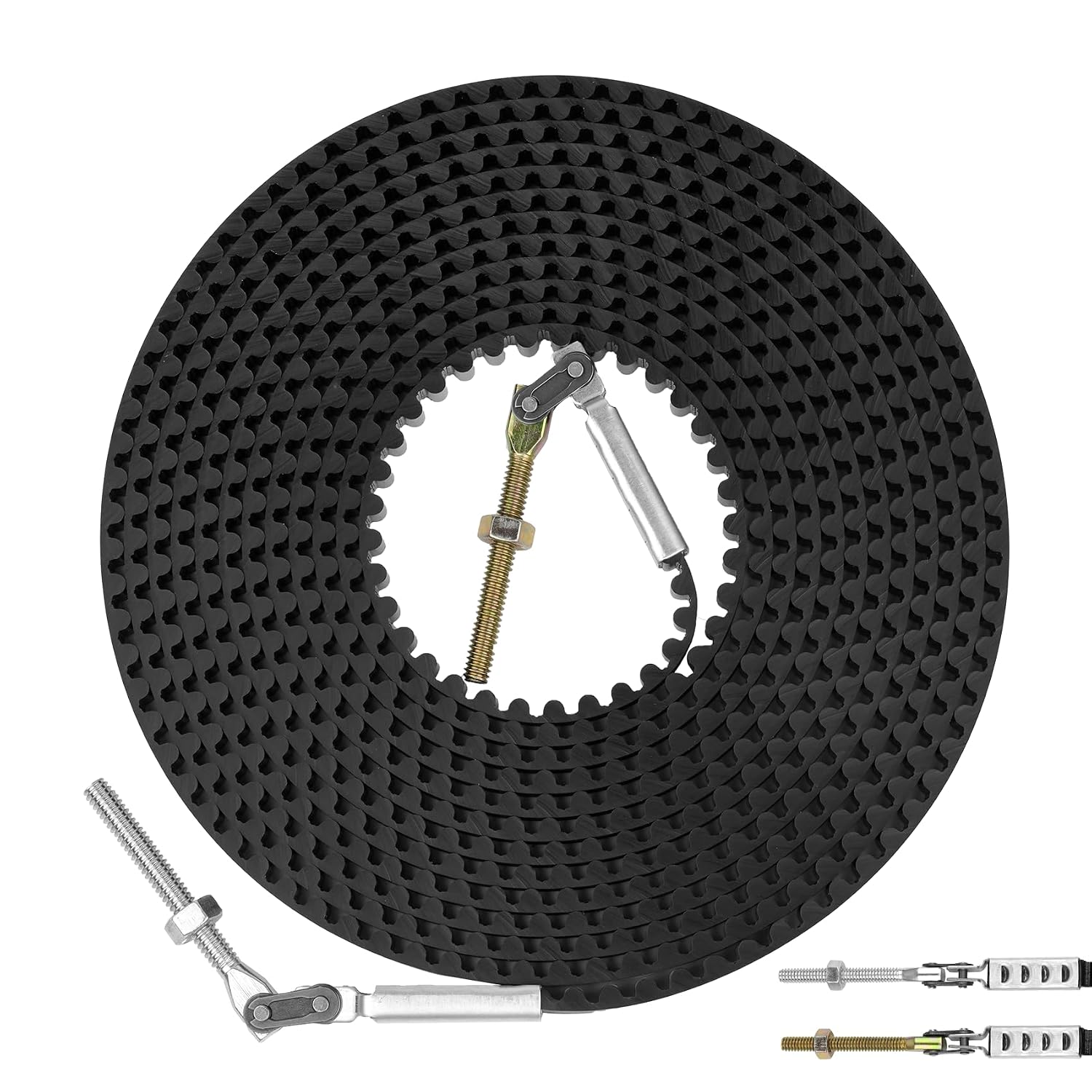
Genie Chain Drive 500 (Model 1035)
Simplest mechanism in the group, fewer electronics to fail, chain drive parts are easy to source
No battery backup, no smart control out of the box, chain noise carries into the house
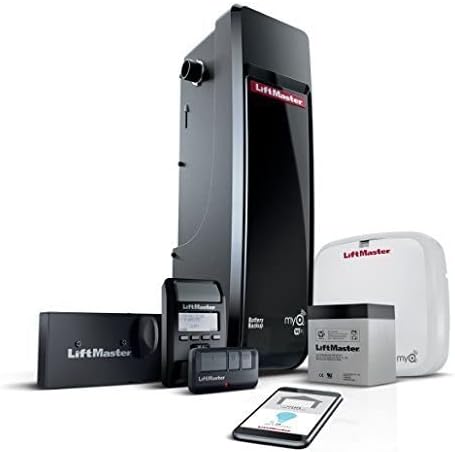
LiftMaster Premium Series 98022 Jackshaft Operator
Mounts on the wall beside the torsion bar, frees the entire ceiling, WiFi built in, best parts availability in the business
Highest cost here, needs a torsion bar system and side clearance, more install planning than a ceiling unit
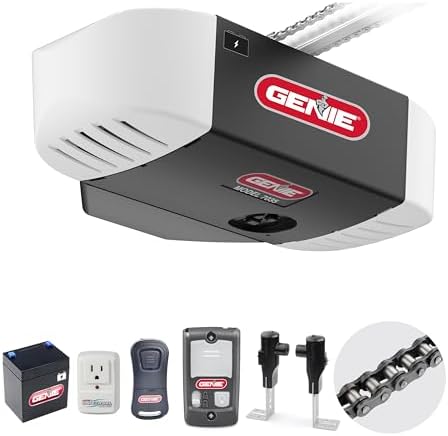
Genie Chain Drive 750 (Model 7035-TKV)
Battery backup runs the door when the grid is down, 3/4 HPc motor, wireless keypad included
Chain noise, no built-in smart control, the backup battery is one more thing to maintain
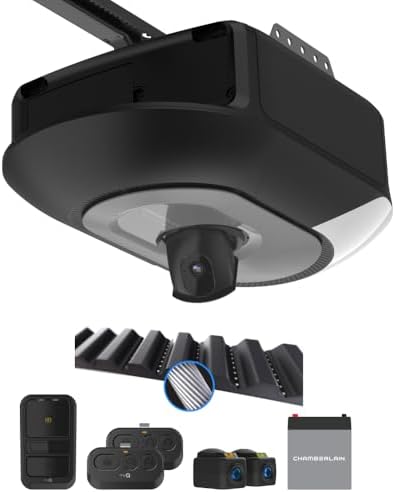
meross Smart WiFi Garage Door Opener Remote
Cheapest route to phone and voice control on an opener you already own, works with Alexa and Google
It is not an opener, it fixes nothing mechanical, and smart modules are where my support calls come from
Prices and availability were captured from Amazon Creators API and may change.
Three openers and one accessory
The first thing to get straight is that this is not a four-way comparison of the same category. The Genie 1035, the Genie 7035-TKV, and the LiftMaster 98022 are complete openers. Each one includes the motor head, the drive, and the hardware to move a door.
The meross is not an opener. It is a WiFi controller that wires into an opener you already have, so you can open and close the door from a phone or by voice. If your current opener is on its last legs, the meross will not save it. If your current opener is fine and you want app control without paying for a new unit, the meross is the least expensive thing in this article.
So the real comparison is three ways to drive a door, plus one way to make an existing door smarter.
Chain drive, and why I still sell it
Chain drive gets dismissed as the budget option, and there is truth to that. A chain running over a rail is noisier than a belt, and the noise travels. If your master bedroom sits directly above the garage, you will hear that door at 6:15 a.m. That is the one thing I cannot fix with a wrench.
What chain drive buys you is simplicity. There is no belt to stretch or fray, and the mechanism is the same one that has been hanging from garage ceilings for decades. The Genie 1035 is the entry point of this group, and its appeal is exactly that: fewer electronics, a mechanical drive, and parts you can find without waiting three weeks. For a detached garage, a shop, or a house where nobody sleeps near the door, that simplicity is worth more than quiet.
The Genie 7035-TKV, sold as the Chain Drive 750, is the same philosophy with more motor and a battery. It is rated at 3/4 HPc, which matters if you are lifting a heavy insulated door or a door with a lot of glass. It also ships with a wireless keypad, which is the accessory people forget to buy and then need the same week. Visit on Amazon →
My complaint about both of these is the same complaint I have about every chain unit: you are trading quiet for cost, and the trade is only worth it if the door is far enough from where people sleep.
Battery backup is not a gimmick in Oklahoma
I write this from Tulsa, where the power goes out in ice storms, in wind events, and on ordinary Tuesday afternoons in July when the grid decides it has had enough. When the power is out, the garage door is often the only way out of the house that does not involve a window.
A battery backup opener keeps that exit working. That is the whole argument, and it is a strong one. The Genie 7035-TKV carries that feature, and it is the reason I put it at the top of this group for a typical house.
The caveat is the battery itself. A garage in an Oklahoma summer is a hostile environment, and heat is what kills backup batteries early. I keep a running log on how these packs hold up through a season, because the chemistry matters more than the marketing. Whatever you buy, plan on testing the battery twice a year and replacing it when it stops holding. A dead backup battery is worse than none, because you will trust it right up until the night you need it.
Jackshaft: the answer when the ceiling is a storage unit
The LiftMaster 98022 is a different animal. It is a jackshaft operator, which means it mounts on the wall beside the torsion bar instead of hanging from the ceiling. If you have ever wanted to put a lift, a rack, or a kayak hoist in the middle of your garage ceiling, a jackshaft is the only way to get that space back.
It also solves a specific problem I run into constantly: low headroom. Some garages simply do not have the clearance for a conventional rail and motor head, and a wall-mounted operator sidesteps the issue entirely. This unit is the replacement for the 8500W and it has WiFi built in, so you get the smart control without adding a module.
Two conditions come with it. First, a jackshaft needs a torsion spring system, not extension springs. If your door still runs on extension springs, this is not a bolt-on upgrade, and the conversion is a professional job. Second, it needs clearance beside the door for the unit itself. Measure before you order.
The other thing you get for the money is LiftMaster's parts network. In my experience, Chamberlain and LiftMaster parts are the ones you can actually get when something breaks years down the road. That is worth real money on a machine you plan to keep for fifteen years. Visit on Amazon →
The smart retrofit: 10 percent of the product, 90 percent of the support calls
The meross controller is a small box that connects to your existing opener and gives you phone control plus Alexa and Google voice commands. On paper it is the best value in this article, because it costs a fraction of an opener and it works with the door you already have.
In practice, this is the category that generates most of my service calls. Not because the hardware is bad, but because pairing, Wi-Fi signal in a garage, and app accounts trip people up. A garage is often the worst place in the house for Wi-Fi, and it is the farthest room from the router.
If you go this route, ask one question before you buy anything: does the door still open when the internet is down? The wall button should always work regardless of the app. Any smart controller that leaves you locked out during an outage has the priorities backwards.
The meross makes the most sense in two situations. One, your opener is healthy and you just want to stop carrying a remote. Two, you want voice control without replacing a unit that has years left in it. It will not fix a door that is out of balance, a photo-eye that keeps tripping, or a motor that is on its way out. Visit on Amazon →
Door balance comes before the box
I will say this until I am hoarse. The opener does not lift your door. It gives the door a push, and the springs do the work. A door that is out of balance will kill a new opener just as fast as it killed the old one, and no amount of horsepower fixes it.
Disconnect the opener and lift the door by hand. It should come up with modest effort and stay put when you let go at waist height. If it slams down, or if you have to muscle it, stop. Fix the springs and the rollers first. That is a professional job, and I mean that literally, because torsion springs store enough energy to hurt you badly.
Do that before you order anything from this list. Otherwise you are buying a motor to fight a mechanical problem.
Install day traps
Most of the installs I get called to fix are not motor failures. They are rail and alignment failures, and they show up within a year.
The rail has to be level and straight. A rail that sags or twists loads the drive unevenly, and uneven load is what strips gears. The header bracket has to be centered on the door's centerline, not centered on whatever looked close in the garage. Travel limits have to be set so the door closes fully without the rail bowing and opens fully without the trolley slamming the stop.
Photo-eyes get mounted at the height of the bottom bracket, aimed at each other, and tightened so a bump does not move them. If your photo-eyes need realignment every time someone brushes past, the brackets were never tight.
Finally, if you are paying someone, budget for a pro install. It is a few hours of work, and the ones I see done wrong are wrong in ways that do not show up for months.
Trade-offs, plainly
If you want the fewest moving parts and the lowest cost of entry, the Genie 1035 is the straightforward pick, with the understanding that you are giving up quiet and backup power.
If you want one opener that covers the most houses in this part of the country, the Genie 7035-TKV is it. Battery backup for storm season, 3/4 HPc for a heavier door, and a keypad in the box. The trade is chain noise and no built-in app.
If your ceiling is precious, your headroom is tight, or you want the longest parts runway, the LiftMaster 98022 is worth the money, provided you have torsion springs and clearance beside the door.
If your opener works and you just want it on your phone, the meross is the cheap win, as long as you accept that smart modules are the most fragile link in the chain and the wall button is your fallback.
What I am watching next
Two things. First, battery chemistry. I think the backup segment grows as extreme weather gets more common, and the units with lithium packs will separate from the ones with lead acid, especially in a garage that bakes all summer. Second, local control. Buyers are getting tired of apps that need a cloud login to open a door in their own house, and the first brand that ships a genuinely local smart opener wins a lot of goodwill.
Until then, balance the door, check the headroom, and decide whether you are buying a machine or buying quiet. That decision is worth more than any spec on the box.