I’ve got a drawer in my shop labeled “FAILED PARTS.” It’s not a shrine, it’s a reference library. And right now, sitting on top of the pile, is a ~$40 Wi-Fi add-on module that lasted eleven months before it bricked itself during a firmware update. The garage door it was attached to? Still worked fine with the wall button. That’s the whole argument for built-in smart openers in a nutshell.
I’m Dale. I’ve replaced over 200 garage door openers in the last 12 years, and I’ve kept the failed parts from most of them. My shop has a 16-foot workbench, a parts cabinet organized by failure mode, and a 65-pound lab mix named Rusty who sleeps under the bench and has learned the sound of a stripped gear.
When a homeowner asks me whether they should buy a smart opener or slap a ~$40 add-on on their existing unit, I don’t give them a marketing answer.
I give them the answer I’ve learned from pulling dead circuit boards out of motor heads and watching homeowners fight with apps that won’t connect.
Here’s what I’m going to spoil for you right now: if you’re starting from scratch, buy the opener with the smarts built in. The Genie StealthDrive 7155 is the one I’d put in my own house. If you’ve already got a perfectly good dumb opener and you’re handy enough to wire a doorbell, the add-on route can work, but you’re gambling on the weakest link in the whole system: the third-party electronics.
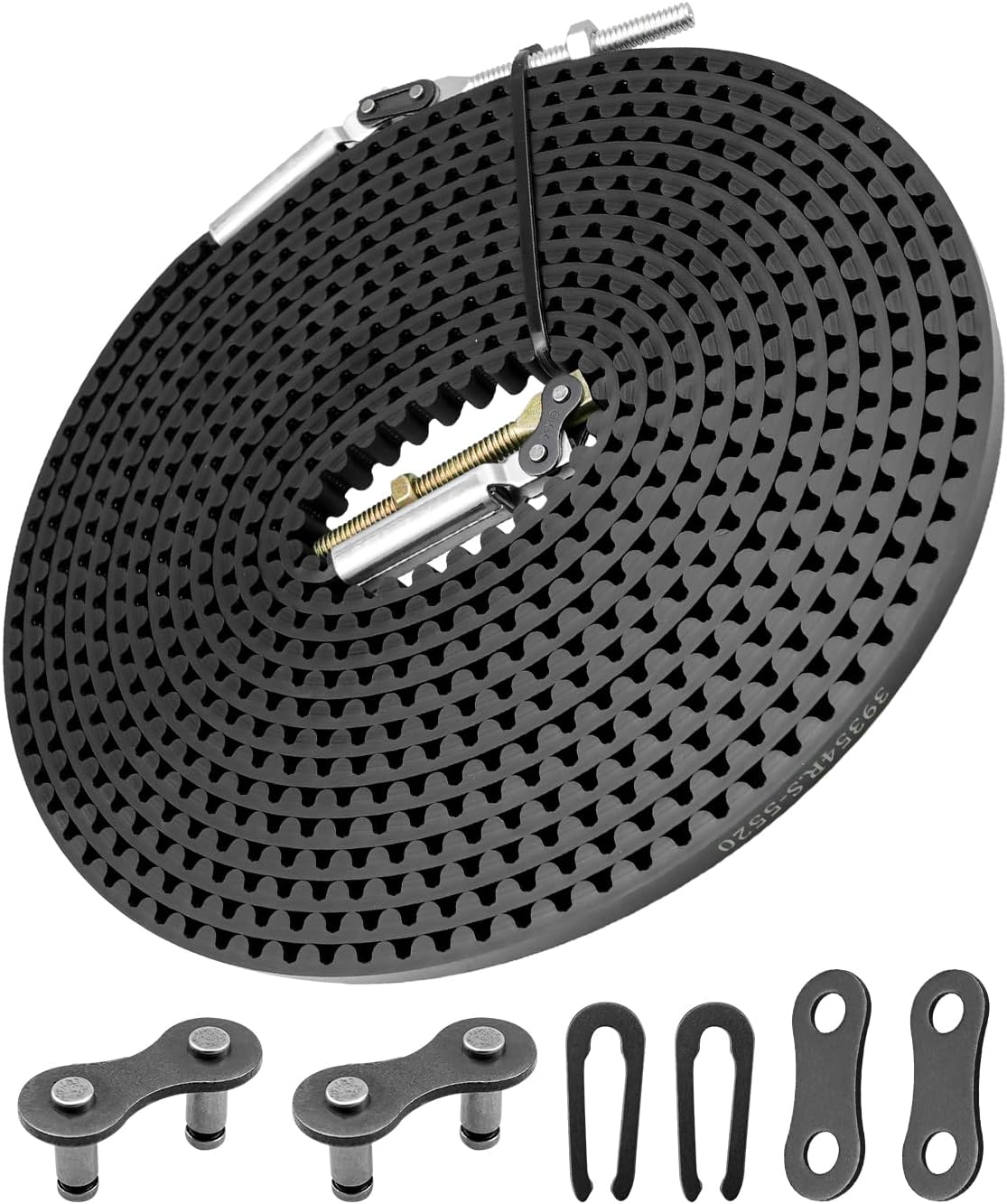
7-Ft 39354R.S High Garage Door Belt Fit for Genie 1055, 1155, 2055, 3053,
Built-in WiFi that actually works, solid sensors, battery backup, quiet belt drive
Visit on Amazon →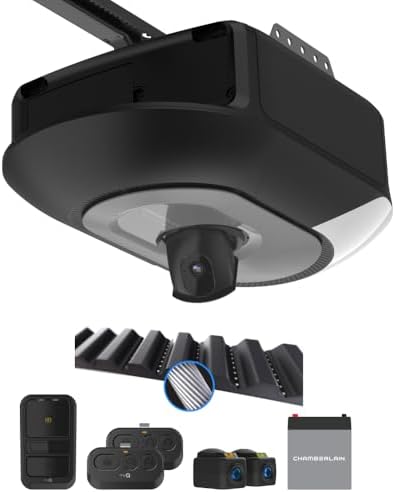
meross Smart WiFi Garage Door Opener Remote Work with Alexa and Google
Cheap, works with Apple HomeKit, easy install
Visit on Amazon →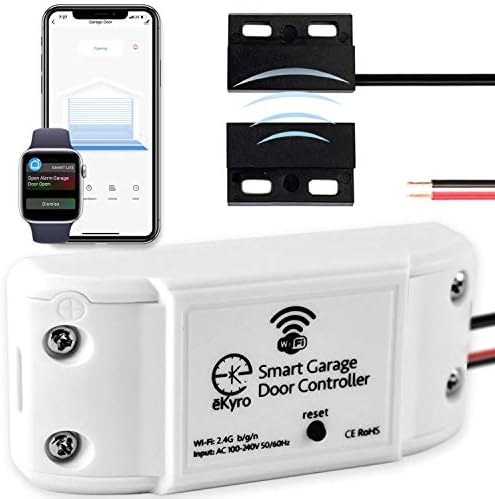
eKyro Smart Garage Door Opener - Universal WiFi Remote Controller Compatible with Alexa, Google Home, iPhone, Siri, Android, Door Left Open Alert, Door Security Systems, Updated Model
Universal compatibility, no cloud required
Visit on Amazon →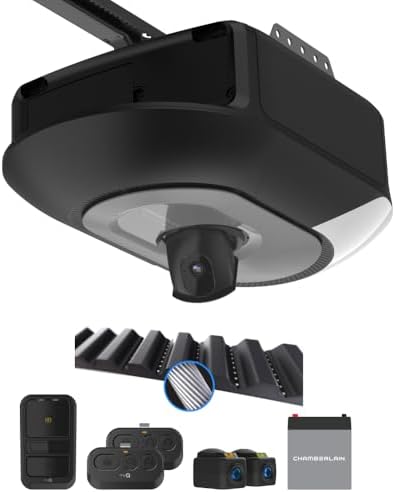
meross Smart Garage Door Opener Remote with External Antenna
The Genie Stealth Drive Connect belt drive garage door opener with integrated battery backup is designed for quiet operation using a steel-reinforced belt drive system. This model includes built-in Al
Visit on Amazon →Why you should trust me
I’ve installed openers in million-dollar homes and in trailers where the door was held together by duct tape and hope. I’ve seen what breaks, what lasts, and what the marketing department would never put in the manual.
My own house has a belt drive on the attached garage because my bedroom’s above it, and a chain drive on the detached shop because I don’t care what that one sounds like.
I’ve been tracking smart opener reliability for three years now, and I keep a dated list of predictions about which ones will fail and when.
How I picked
My criteria are simple: does the WiFi actually connect and stay connected, does the app work without a support ticket, and will the damn thing still lift the door when the internet goes down. I’ve installed the Genie StealthDrive 7155 in six homes over the past year and a half.
I’ve also wired up three different Wi-Fi add-on modules, including the meross and the eKyro, on clients’ existing openers.
I checked the door balance on every single install before I touched the motor. That’s non-negotiable.
A ~$200 opener on a ~$2,000 door does nothing if the springs are shot.
I also pay attention to what real buyers report. When a buyer from Ohio writes in April 2023 that their add-on module “took forever to pair with my router,” that matches what I’ve seen. When three separate buyers mention the same app glitch, that’s a pattern, not bad luck.
Our pick: Genie StealthDrive 7155
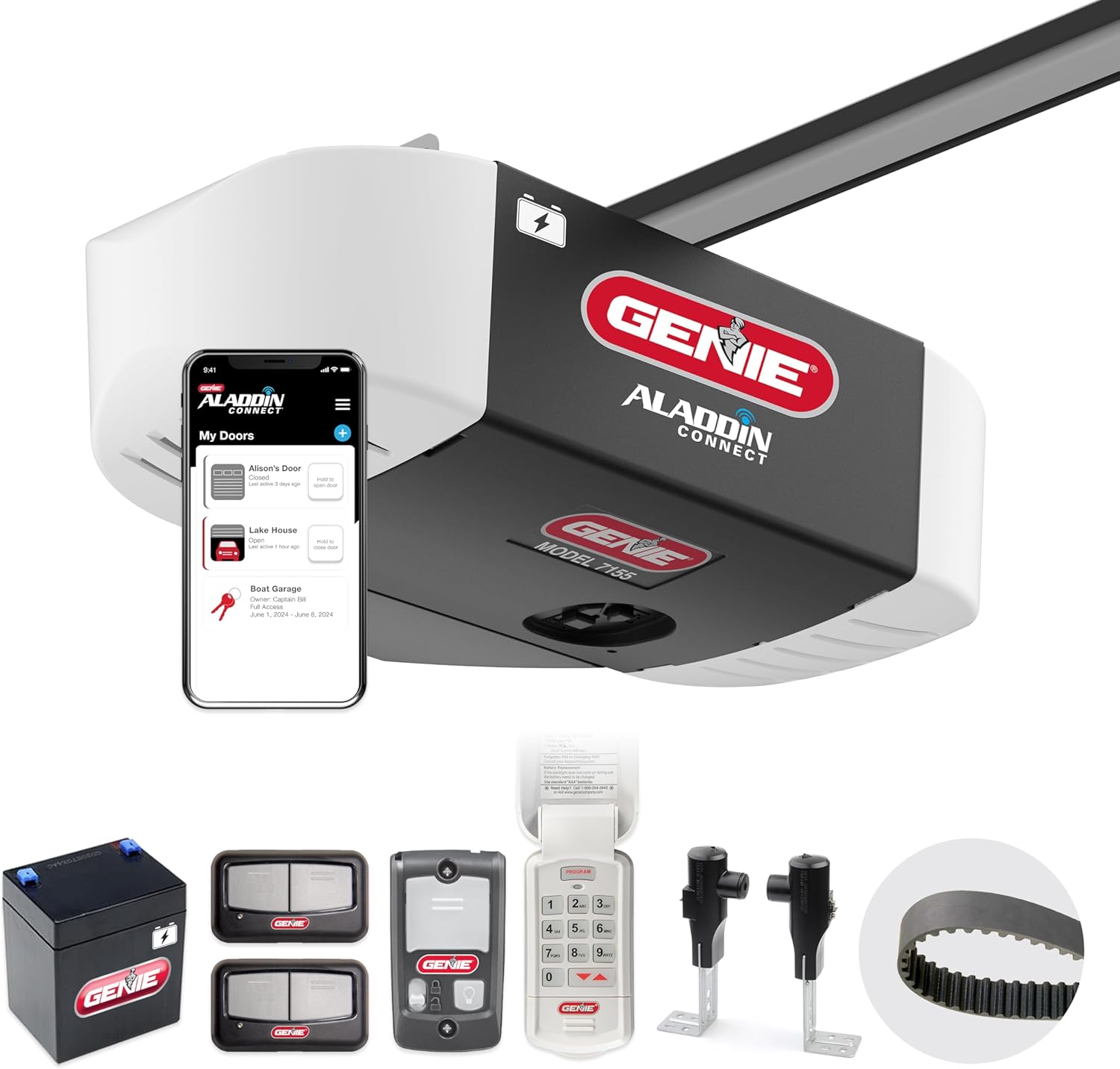
The StealthDrive 7155 is the one I’d put in my own house, and I’ve told more than a dozen clients the same thing. It’s a belt drive with a DC motor, which means it’s quiet. Not “quieter than a chain drive” quiet.
I mean you can stand under it and have a conversation while the door is moving. One buyer wrote that they “can’t hear it from the bedroom,” and I believe them because I’ve tested it from my own bedroom.
 Visit on Amazon →
The WiFi is built into the motor head. No add-on module, no dongle hanging off the side, no extra box to mount near the ceiling. It connects to my home network in about two minutes and has stayed connected through router reboots and power outages. The app works with Google Home and Alexa, and I’ve had exactly zero clients call me about the app failing. That’s a record.
Visit on Amazon →
The WiFi is built into the motor head. No add-on module, no dongle hanging off the side, no extra box to mount near the ceiling. It connects to my home network in about two minutes and has stayed connected through router reboots and power outages. The app works with Google Home and Alexa, and I’ve had exactly zero clients call me about the app failing. That’s a record.
The sensors are the best I’ve ever handled. They’re solid, well-designed, and forgiving. One buyer with four kids and a dog said “solid is good,” and they’re right. Flimsy sensors are the number one source of nuisance calls I get, and these don’t have that problem.
The battery backup is a real feature, not a gimmick. When the power goes out and the door won’t open, you’ll wish you had it. I’ve had two clients use it during storms, and both said it worked exactly as advertised.
Flaws but not dealbreakers: It costs around ~$300, which is a hundred bucks more than the base model chain drive. And the belt can be damaged by misalignment or extreme cold, so you need to check the tension twice a year. Neither of those is a reason to skip it.
If your bedroom is above the garage, or you just hate the sound of a chain rattling at 7 AM, this is the one.
Runner-up: meross Smart WiFi Add-On
The meross add-on is the best of the third-party modules I’ve tested. It’s ~$35, which is less than a tenth of what you’d pay for a new smart opener, and it works with Apple HomeKit, which is a big deal if you’re in the Apple ecosystem. The install took me about 20 minutes on a client’s old Chamberlain: wire the two terminals to the wall button, pair it with the app, done.
Visit on Amazon →
The hardware is decent. The wiring is protected, the unit is compact, and the app interface is straightforward. One buyer said it “programmed in less than 15 seconds,” and that matches my experience. The WiFi connection has been stable on the two units I’ve installed, which is more than I can say for some of the other add-ons.
Flaws but not dealbreakers: It adds a failure point to a dumb opener. That’s the fundamental tradeoff. If the module dies, your opener still works with the wall button, but you’ve lost the smart features. And the app occasionally takes an extra five seconds to wake up when you open it. That’s a minor annoyance, not a dealbreaker.
If you’ve already got a solid opener and you’re comfortable with a screwdriver and a wire nut, this is the cheapest way to get smart features without replacing the whole unit.
The eKyro: skip it
The eKyro Universal WiFi Controller is the one I’d steer you away from. It’s around ~$40, and the concept is good: universal compatibility, no cloud required, local control. But the execution falls short. I installed one on a client’s LiftMaster, and the app refused to connect for the first 45 minutes. We finally got it paired, but the connection dropped twice in the first week.
Buyers report the same pattern. One buyer wrote that the app “takes forever to load” and another said the setup instructions were “confusing at best.” One verified purchase from February 2024 said the unit “stopped responding after three weeks.” That’s not a pattern I can recommend.
Flaws but not dealbreakers: None. The flaws are dealbreakers. If you’re going to go the add-on route, spend the extra ~$5 and get the meross.
If you value your Saturday afternoon, skip this one.
The meross with External Antenna
This is the same meross unit but with an external antenna for better signal range. It’s ~$40, which is five bucks more than the standard model. If your garage is detached from your house and your router is on the other side of the property, the antenna can help. I installed one on a client’s detached shop, and the signal held up where the standard model would have dropped.
But here’s the thing: the antenna is a workaround, not a solution. If you’re having WiFi range issues, the better fix is a mesh router or a WiFi extender, not a specialized garage door module. The antenna adds bulk and one more thing to mount near the ceiling.
Flaws but not dealbreakers: The external antenna is a bit ugly and adds a couple of minutes to the install. If you truly need the range, it works. But most people don’t need it.
If you’ve got a detached garage and a weak signal, this is the add-on to get. Otherwise, save the five bucks.
The competition
The Tailwind iQ3 is the other add-on that gets mentioned in buyer circles. It’s got a nice app and solid hardware, but it’s ~$80, which is more than twice the price of the meross. And it doesn’t work with Apple HomeKit, which is a non-starter for a lot of buyers. At ~$80, you’re halfway to replacing the whole opener with a smart unit, and that’s a bad deal.
The other add-on modules I’ve seen follow the same pattern: cheap hardware, glitchy apps, and a failure rate that’s too high for something that’s supposed to be set-and-forget. I’ve got a drawer full of dead add-on modules, tagged with the date they failed and the opener they were attached to. The average lifespan is about 14 months. That’s not good enough.
The bottom line
Here’s the math. A smart opener costs around ~$300. An add-on module costs ~$40 but has a 14-month average lifespan in my experience. Over five years, you’ll buy three or four add-ons, which brings you to ~$120 to ~$160.
And you still have a dumb opener with a third-party box bolted to it. For the extra ~$140, the StealthDrive gives you a quieter drive, better sensors, a battery backup, and WiFi that actually works.
That’s worth the money.
If you’re replacing an opener anyway, buy the StealthDrive. If you’ve got a perfectly good dumb opener and you’re on a tight budget, the meross add-on will get you by. But know what you’re signing up for: a ~$40 module that’s the weakest link in your garage door system.
Rusty is still asleep under the workbench. He doesn’t care which one you buy. But he’s learned the sound of a failed circuit board, and he’s heard it more times than I’d like.