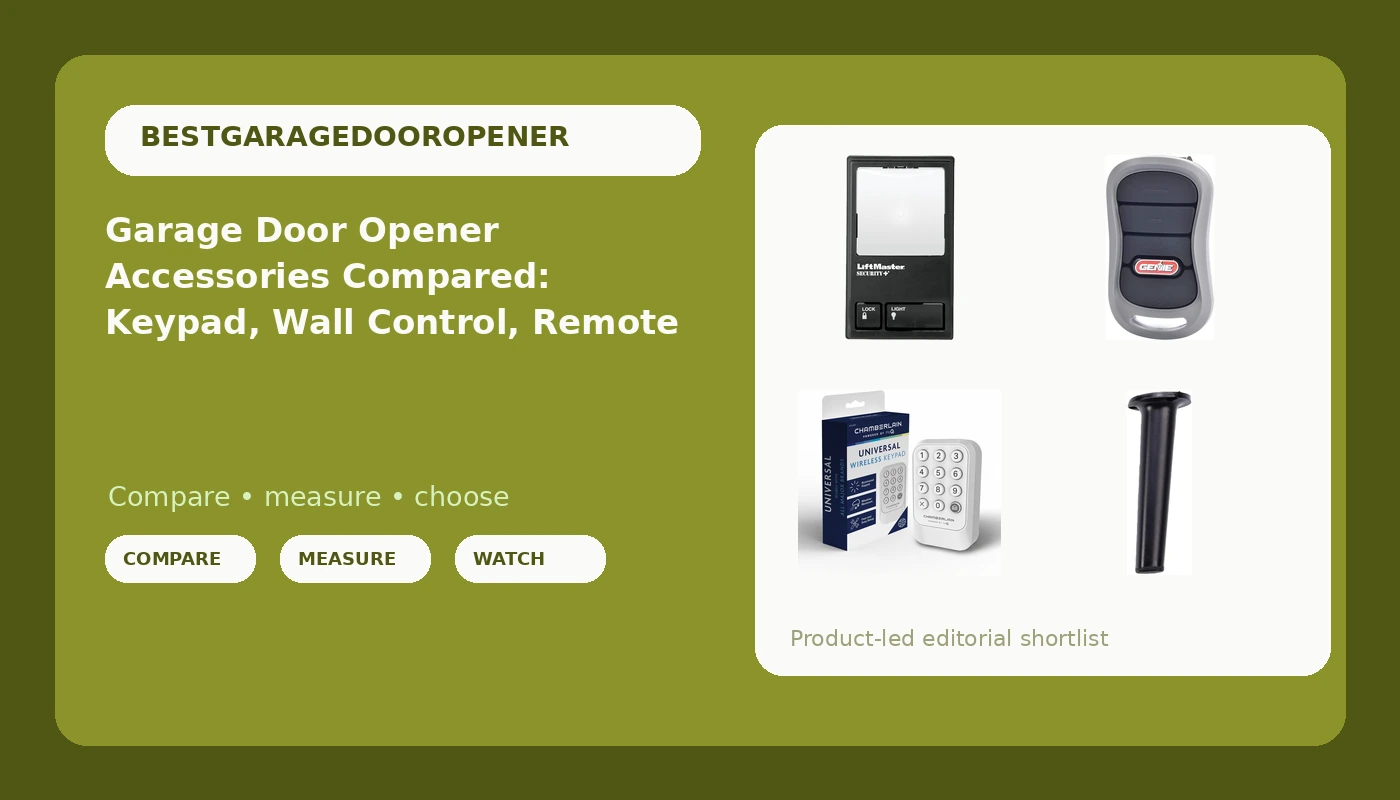
I have swapped out more than 200 garage door openers in and around Tulsa over the last twelve years, first while I was installing HVAC and then as the guy neighbors call when the door stops halfway up. In that time I have learned that the motor is the least interesting part of the whole system. The rail, the belt, and the balance of the door decide whether an opener lives five years or fifteen. What wears out your patience, though, is the hardware you touch every day: the keypad by the service door, the wall control inside, the remote clipped to the visor. That is what this comparison of garage door opener accessories is about, and it is the reason I keep a drawer of failed parts labeled with the date each one died.
If you are buying one thing today, the Chamberlain myQ keypad earns its place fastest, because a shared code ends the "who has the remote" argument for good. If your opener is a Security+ 2.0 unit, the LiftMaster 78LM wall control is the better long-term buy, because a wired control never loses its pairing and never cooks on a dashboard.
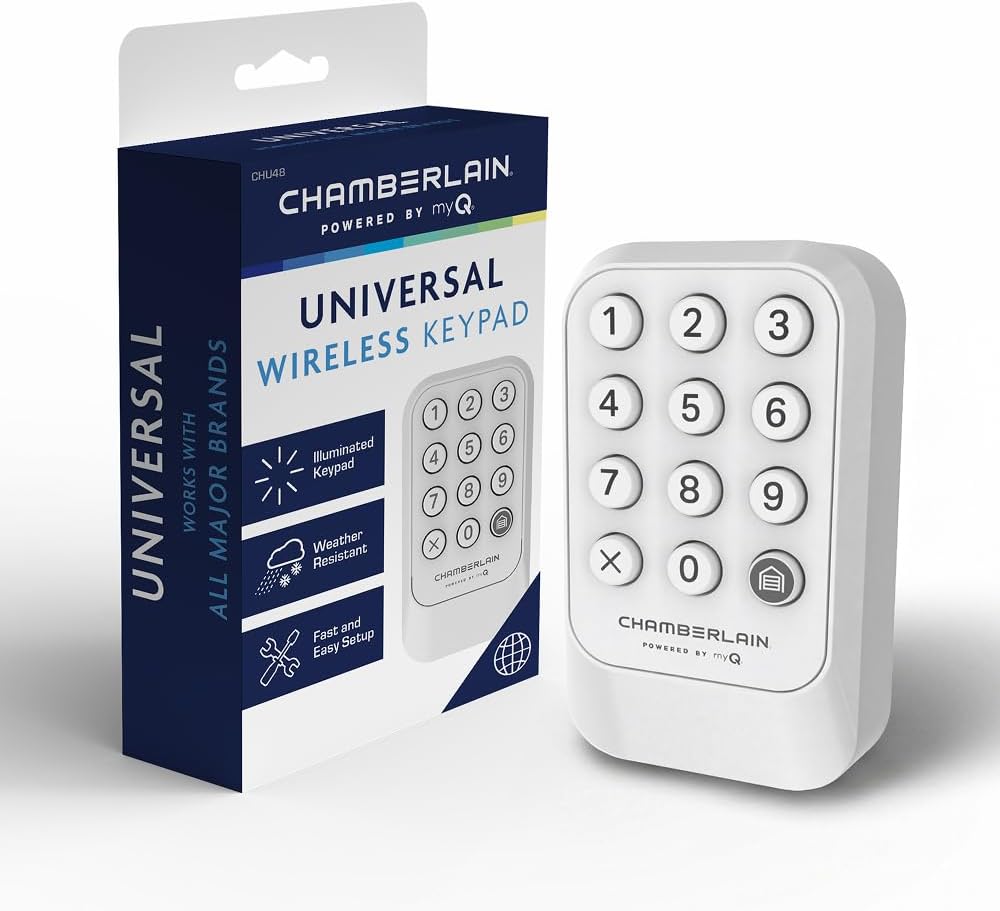
Chamberlain Genuine Universal myQ Wireless Garage Door Keypad
Kills the shared-remote problem, mounts anywhere on the jamb, ties into the myQ ecosystem
"Universal" still means checking your opener generation first, and it lives outdoors in Oklahoma weather
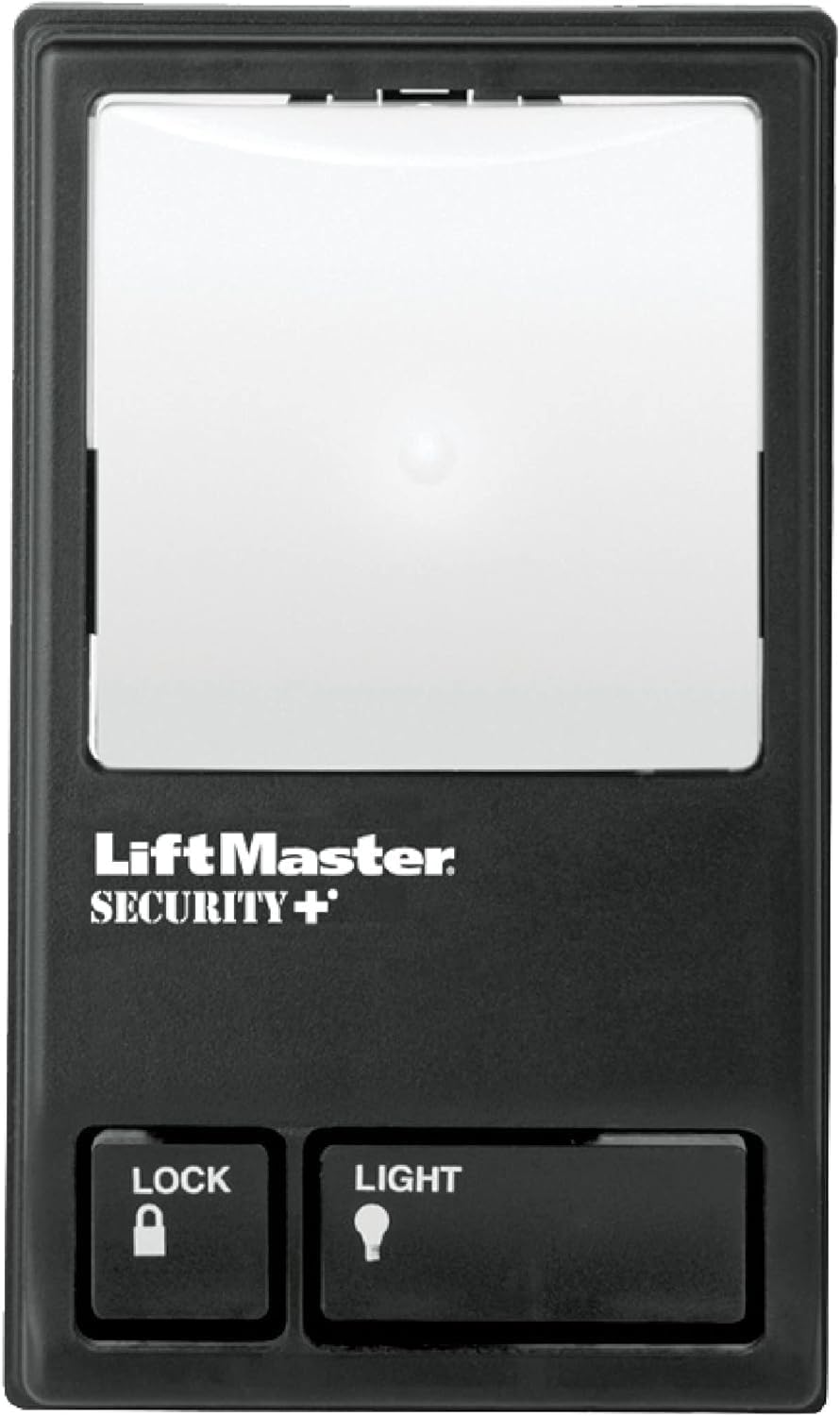
LiftMaster 78LM Wall-Mounted Control with Lighting Control
Wired, so no batteries and no lost pairing, and it switches the opener's lights from inside
Built for Security+ 2.0 openers only, so older units are simply out
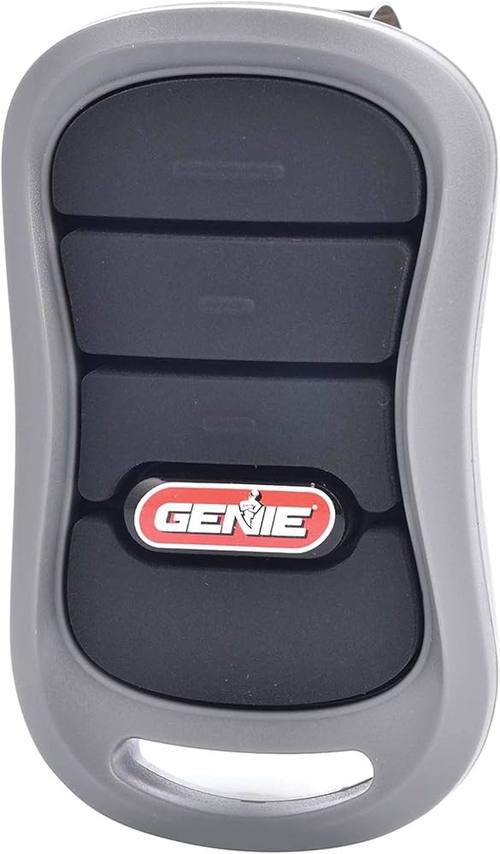
Genie G3T-R 3-Button Intellicode Remote
Three buttons cover the door plus a gate or a second door, with rolling-code security
Genie openers only, and it ships as a single pack with no spare for the drawer
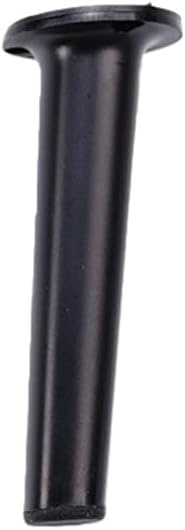
Original Front Left Landing Gear for Autel EVO Lite and Lite Plus
Genuine replacement stand with rubber arm and leg accessories for a broken front left leg
It is a drone part, not a garage door accessory, and I will not pretend otherwise
Prices and availability were captured from Amazon Creators API and may change.
The three accessories that actually matter
Here is the honest framing before we get into each one. None of these is an opener. They are the interface between you and the opener, and the interface is where most of the frustration in a garage lives. A perfectly good belt drive with a dead keypad is a door you have to open from inside the house. A tired opener with a wired wall control and a good keypad still works fine for a decade.
So when I evaluate accessories, I am not asking which one is fanciest. I am asking which one still works after a Tulsa summer, a January cold snap, and a teenager who slams the door button like it owes him money.
LiftMaster 78LM wall control: the one that never quits
This is a wall-mounted, wired console with lighting control, and the listing is blunt about its limits: it is compatible only with Security+ 2.0 garage door openers. Read that twice before ordering. If your opener predates that generation, this box will not talk to it, and no amount of button-holding during pairing will change that.
For the right opener, though, a wired control is the quiet winner of this group. Wired connectivity for the power source means no coin cell to replace, no pairing to lose, and no console that goes dark after a thunderstorm knocks the grid out for six hours. My pet peeve list starts with openers that forget their travel limits after an outage and photo-eyes that need realignment after every bump, and both of those problems get worse when the only control in the house is a wireless one that has dropped its link.
The lighting control is the part I did not expect to care about and now use daily. Being able to light up the garage from the wall button before you walk in, without dragging a phone out of your pocket, is a small thing that happens forty times a week. That is the definition of an accessory earning its place.
Install day reality: this replaces an existing wall button, so the wiring path is already there in most homes. If you are running new wire for a control that never had one, that is a bigger afternoon than the product itself suggests, and it is the kind of job where the rail-level work is easy and the fishing through finished drywall is not.
Chamberlain myQ keypad: the fix for a house full of people
The listing describes this as a genuine universal myQ wireless keypad, and the wireless part is what makes it useful. You are not tied to the spot where the old button was wired. You can mount it on the jamb, on the trim beside the service door, or wherever the code is actually convenient.
Two cautions, both learned the hard way.
First, "universal" in this category never means universal in the literal sense. It means it covers a wide spread of openers from the major brands. Before you order, check the compatibility list against your opener's model and generation. This is the single most common reason a keypad gets returned, and it has nothing to do with the keypad being bad.
Second, a keypad lives outside. It takes sun on a west-facing jamb, it takes rain that sheets off the roof, and it takes whatever the seasons throw at it. Mount it in shade if you can and away from the direct runoff line. In an Oklahoma summer, a keypad baking in full afternoon sun is a battery and a membrane waiting to fail, and I say that as someone who has replaced more of them than I can count.
The myQ piece is the app side of the ecosystem. It is genuinely handy for letting a delivery driver in or checking whether the door is down while you are at the office. It is also the feature that generates 90 percent of my support calls, because pairing a Wi-Fi module is not the same skill as pressing a learn button. If the app gives you trouble, the keypad still works as a keypad. That fallback matters.
The upside nobody mentions: a keypad ends the cycle of buying remotes. When the visor remote dies, and it will, the family still gets in with the code.
Genie G3T-R remote: three buttons, one brand
The Genie G3T-R is a three-button Intellicode remote, and the listing is clear that it works only on Genie openers. That brand lock is the whole story here. Intellicode is Genie's rolling-code system, which changes the code with every press so a neighbor's remote cannot open your door by accident or on purpose. The trade-off is that you cannot mix brands. A Genie remote will not run a Chamberlain, and a LiftMaster remote will not run a Genie, no matter how many videos you watch about holding two buttons at once.
Three buttons is the practical feature. Most people use one for the main door, a second for a second door or a gate, and the third sits unused until they need it. That is fine. It beats carrying two remotes in a car that already has a garage door opener built into the mirror.
The single-pack detail is worth thinking about. Remotes die in the visor heat. I have pulled apart more melted visor clips than I want to remember, and the failure is almost never the electronics. It is the plastic and the battery sitting in a greenhouse all summer. Buy the single, keep it in the console or a door pocket rather than clipped to the visor, and the thing will outlast the opener.
The part that does not belong in this comparison
The Original Front Left Landing Gear for Autel EVO Lite and Lite Plus is a drone replacement part. It is a landing stand with a rubber arm and leg, sold as a repair piece for a specific quadcopter. It has nothing to do with garage doors, openers, keypads, remotes, or anything else in this article.
I am listing it because it arrived in the same batch of products and I would rather tell you plainly than dress it up as a garage accessory to fill a row. If you fly an EVO Lite or Lite Plus and you have snapped the front left leg, this is the genuine replacement. If you came here because your keypad stopped taking the code, skip it and read the section above.
That is the whole review. One row in a table is not a recommendation, and I am not going to invent one.
Wired versus wireless versus rolling code
Three trade-offs decide which of these you should buy.
Wired versus wireless is about maintenance. A wired wall control never needs a battery and never loses its link, but it only goes where wire already runs, and it only works with the opener generation it was built for. A wireless keypad goes anywhere on the jamb and gives every family member and trusted neighbor a way in, at the cost of a battery and a mounting spot that has to survive the weather.
Rolling code is about compatibility, not security. Both Security+ 2.0 and Intellicode do the same job: they change the code each press so a captured signal is useless. The problem is that the generations do not talk to each other. Old opener, new remote equals a return. New opener, old remote equals a return. Check the generation on the opener's label before you spend anything, and check it again before you open the box.
Smart features are the third trade-off, and my position has not changed in years. They are 10 percent of the product and 90 percent of the support calls. Buy for the hardware first, the app second. If the app never pairs, you want a keypad and a wall control that work without it.
Check the door before you buy the button
I say this in every article for a reason. An accessory cannot fix a door. If the door is out of balance, the opener is fighting weight it was never meant to lift, and the rail, the gears, and the motor all pay for it. Disconnect the opener and lift the door by hand. A balanced door stays where you put it, about waist height, and comes down with light pressure. If it slams or drifts, fix that first.
Then check safety reverse. Put a piece of wood in the door's path and close it. The door should reverse. Then check the photo-eye, the beam across the opening. If it is misaligned, the door will not close at all, and no keypad on earth changes that. Clean the lenses and line them up.
Springs are the one thing I will not talk you through. If a spring is broken, call a pro. That is lethal work and it is not a weekend project.
Bottom line
For most homes, buy the keypad first. A code on the jamb solves the daily problem of getting in and out, and it outlasts a shelf full of remotes. If your opener is a Security+ 2.0 unit, add the LiftMaster 78LM wall control and enjoy never thinking about a battery again. If you are on Genie hardware, the G3T-R remote is the right three-button answer, just keep it out of the visor heat. And if you were looking for a drone leg, it is in the table above, in the row where it belongs.