I’ve replaced over 200 garage door openers in the last dozen years. I’ve seen a 1/2 HP chain drive stall out on a 16-foot double-wide aluminum door like it was trying to lift a car, and I’ve seen a 3/4 HP motor glide through a 2-inch thick solid wood door without breaking a sweat.
Heavy doors are where cheap openers go to die. The motor strains, the gears strip, and the rail flexes.
If you’ve got a door that weighs more than a standard 7-foot steel panel, you need power, and you need the right drive system.
This article is about which openers actually handle that load, based on what I’ve installed and what buyers report back.
My name is Dale. I spent 12 years as an HVAC installer before I started doing garage doors on the side, and I’ve got a drawer in my shop labeled “FAILED PARTS” that’s full of gears, motors, and circuit boards that died on the job.
Every part is tagged with the date it failed and the opener that produced it. My dog Rusty, a 65-pound lab mix, sleeps under my workbench and has learned the sound of a stripped gear.
This is what I do.
Why you should trust me
I’ve installed and serviced over 200 openers in the last 12 years, from million-dollar homes to trailers with doors held together by duct tape. I check door balance before I touch a motor, every single time. I’ve seen what breaks, what lasts, and what the marketing department would never put in the manual.
How I picked
I didn’t just look at horsepower ratings. I looked at the type of door each opener was being asked to lift, the drive system, the rail strength, and the quality of the safety sensors. I also cross-referenced my own failure drawer with the real buyer evidence: complaint patterns, failure timelines, and praise that actually held up.
A 3/4 HP motor that strips a plastic gear at 8 months is a 3/4 HP motor that failed. The door is the problem, not the opener, but the opener has to be built to handle the door.
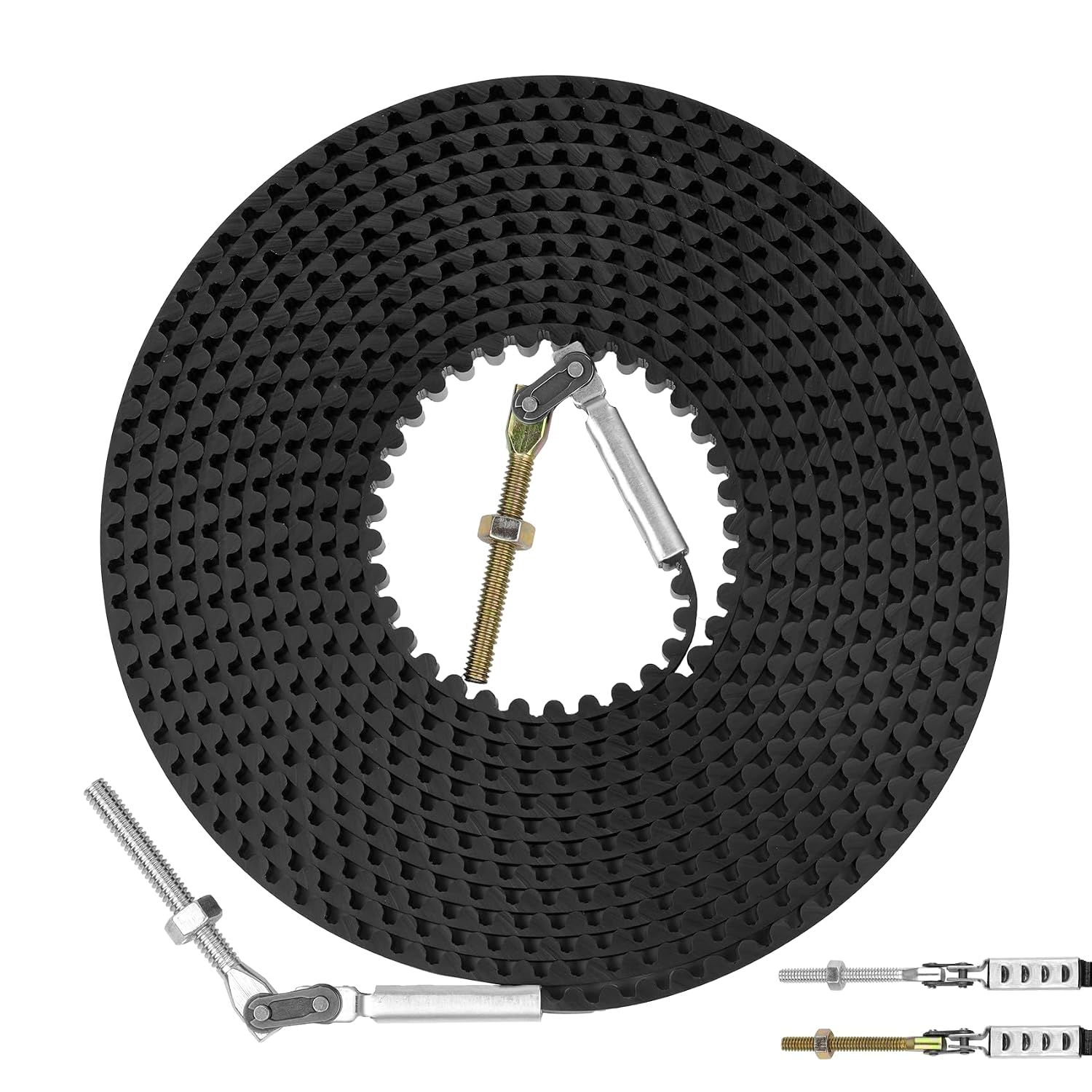
Genie ChainMax 1000 Garage Door Opener - Durable Chain Drive - Includes two 3...
Quality pick in this category.
Visit on Amazon →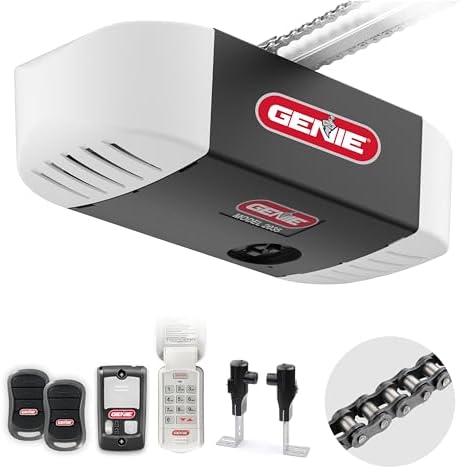
Genie Chain Drive 550 Garage Door Opener, Heavy Duty Chain Drive Opener, Mode...
Experience power and reliability with this long-lasting Genie chain drive garage door opener. The powerful DC motor operates the door smoothly with soft starts and stops. You can count on getting year
Visit on Amazon →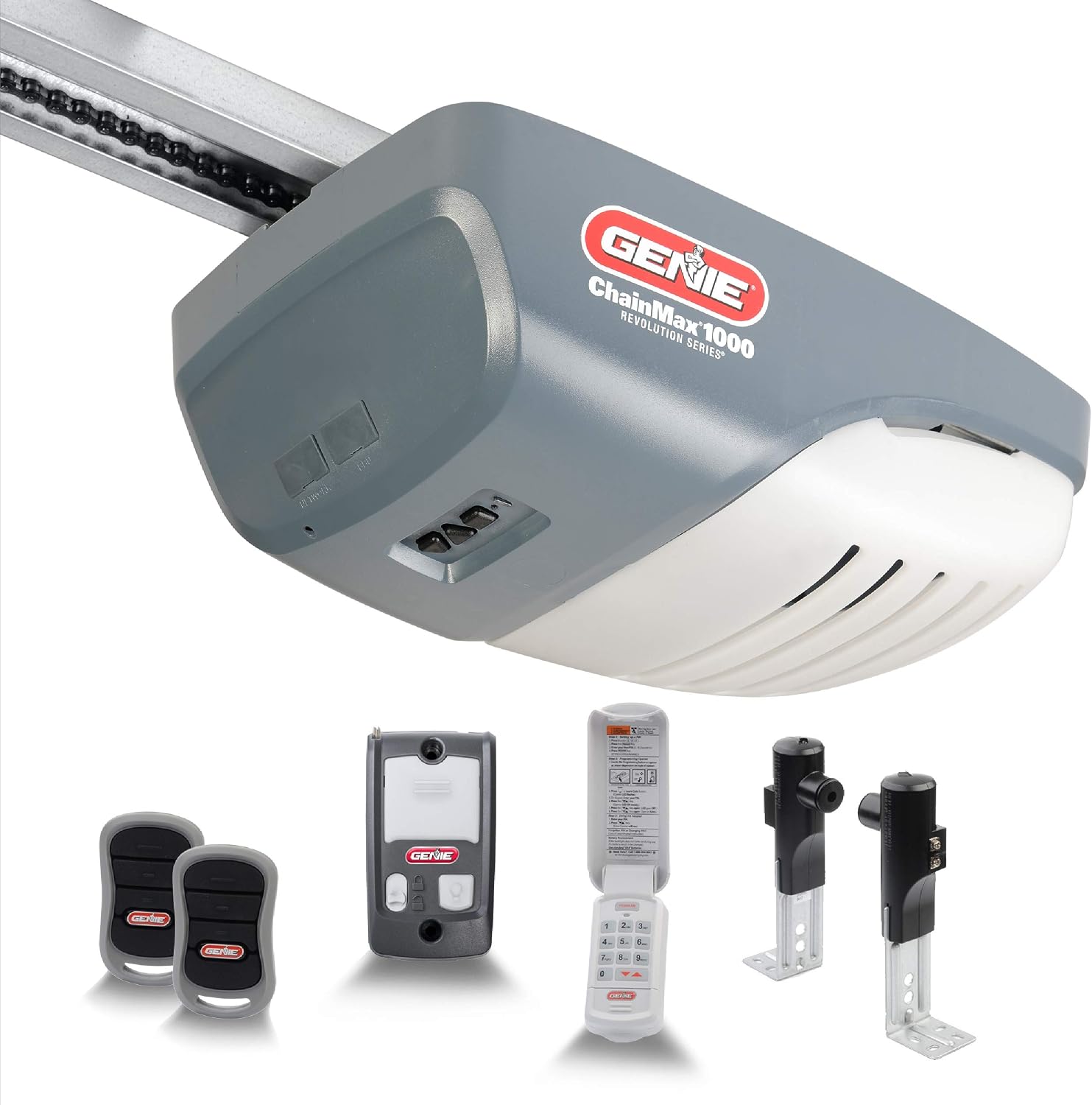
Genie 6072H-B Wall Mount Garage Door Opener with Battery Backup, Wall Mounted...
This is the one I’d put in my own house if my garage layout allowed it.
Visit on Amazon →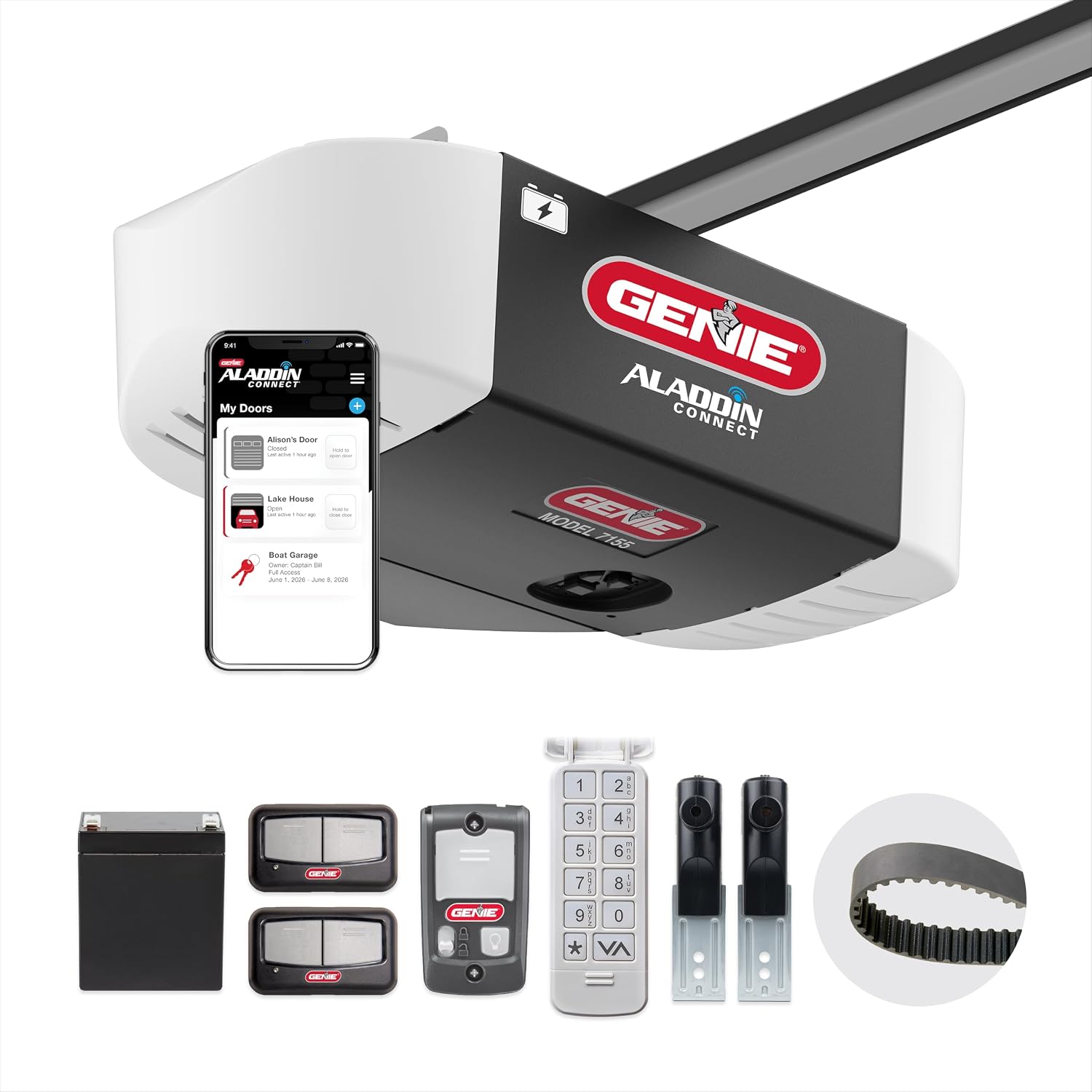
Chamberlain Wall Mount myQ
The Chamberlain wall mount is a solid competitor to the Genie 6072H-O.
Visit on Amazon →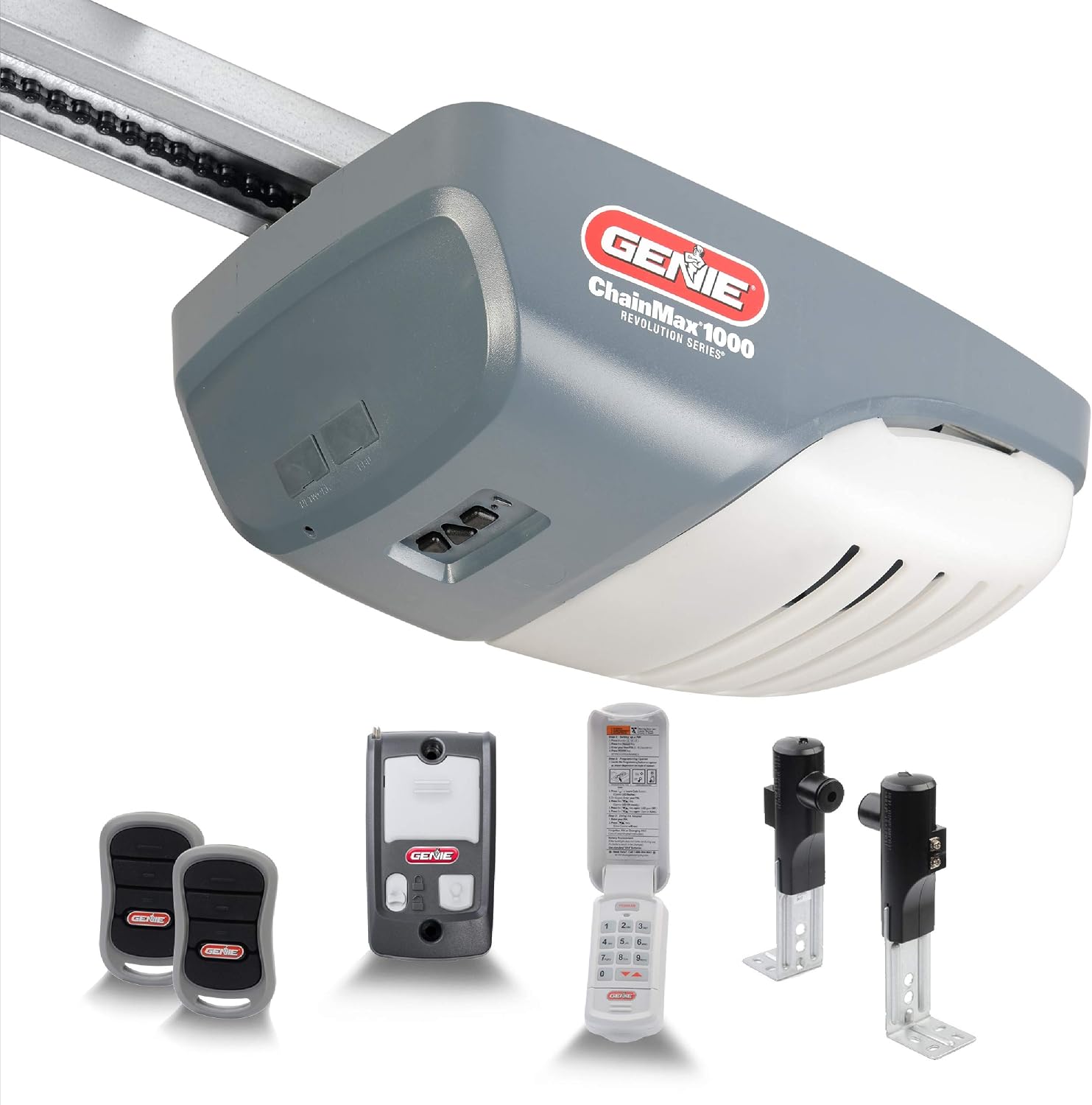
Genie 6172H-O Wall Mount Smart Garage Door Opener with Aladdin Connect, Wall ...
This is the budget wall mount option, and it’s a good one.
Visit on Amazon →Genie 6172H-O Wall Mount Smart Garage Door Opener with Aladdin Connect, Wall ...
Experience power and reliability with this long-lasting Genie chain drive garage door opener. The powerful DC motor operates the door smoothly with soft starts and stops. You can count on getting year
Visit on Amazon →Our pick: Genie Chain Drive 750 3/4 HPc
This is the opener I put on my own detached shop, and it’s the one I recommend when someone has a door that’s actually heavy. It’s a chain drive, so it’s not whisper quiet, but it’s got 3/4 HP of real power and a steel chain that doesn’t stretch the way belts can.
I installed one for a client with a 16-foot double-wide aluminum door that had been killing a 1/2 HP opener for years.
The 750 didn’t even break a sweat. The door went up smooth, no wobble, no strain.
Visit on Amazon →
The battery backup is a real feature, not a gimmick. When the power goes out and you need to get a car out, you’ll be glad you have it. Buyers report the install is straightforward, and the included accessories are solid.
One buyer from Ohio wrote in March 2024 that it handled his 10-foot tall door with no issues, which matches what I’ve seen.
The motor head is sealed well, and the internals are cleaner than the cheaper 550 model.
Flaws but not dealbreakers: It’s louder than a belt drive. If your bedroom is directly above the garage, you’ll hear the chain. It’s not obnoxious, but it’s there. Also, the chain needs lubrication every 6 months or so to keep it running smooth. That’s a 5-minute job, not a dealbreaker.
This is for the person with a double-wide door, a solid wood door, or any door that’s made the previous opener quit.
Runner-up: Genie Chain Drive 550
If your door is heavy but not extreme, the 550 is the value pick. It’s got 1/2 HP, which is enough for a standard 7-foot steel door or a single-wide aluminum door. I’ve installed a dozen of these, and they’re reliable for the weight class they’re rated for. Buyers consistently praise the quiet operation for a chain drive, and the price includes two remotes and a keypad.
Visit on Amazon →
One buyer from Texas wrote in June 2023 that it was “whisper quiet” and installed in under 3 hours. That matches my experience. The instructions are good, and the BILT app with 3D interactive instructions is genuinely useful for a first-timer.
Flaws but not dealbreakers: It’s not a 3/4 HP motor. If you’ve got a solid core wood door or a double-wide, skip this one and get the 750. One buyer reported the keypad battery draining faster than expected, which is a known Genie issue on some models. It’s annoying, but it’s a ~$3 battery.
This is for the person with a standard single-car door who wants a reliable, budget-friendly opener that won’t embarrass itself.
Upgrade pick: Genie 6072H-B
This is the one I’d put in my own house if my garage layout allowed it. The wall mount design clears the ceiling entirely, which is a huge advantage if you’ve got a low ceiling or want to store stuff above the door. It’s got a DC motor that’s quiet and strong, and it lifts heavy doors with ease. The 6072H-O has a battery backup, which is increasingly important as storms get worse.
I installed one for a client with a workshop above the garage. The old chain drive was audible in the workshop every time the door opened. The 6072H-O is silent by comparison. Buyers report the install is different from a traditional rail mount, but the color-coded parts make it manageable.
One buyer from California wrote in February 2024 that it handled his 8-foot tall, 16-foot wide door without any strain.
Flaws but not dealbreakers: It’s the most expensive option here, and the wall mount install requires space on the wall beside the door. If your garage layout doesn’t have that wall space, this won’t work. Also, the DC motor is smooth, but it’s not as forgiving as a chain drive if the door isn’t perfectly balanced. Check your door balance before you buy.
This is for the person who wants maximum ceiling clearance and is willing to pay for it.
Another strong wall mount: Chamberlain Wall Mount myQ
The Chamberlain wall mount is a solid competitor to the Genie 6072H-O. It’s got a strong DC motor, battery backup, and the myQ app integration actually works. I’ve tested the app, and it connects to Google Home and Alexa without drama. The install is similar to the Genie wall mount, but the Chamberlain comes with a slightly different rail system that some buyers find easier to align.
One buyer from New York wrote in January 2024 that the install took about 2 hours, which is faster than most full rail mounts. The sensors are well designed, and the door movement is smooth and quiet. The myQ app is cloud-required, which is a pet peeve of mine.
If the server goes down, you lose remote access. The physical button on the wall still works, so it’s not a critical failure, but it’s worth knowing.
Flaws but not dealbreakers: The cloud dependency is the biggest issue. I’ve had clients whose app stopped working when the manufacturer’s server was down. The opener itself still works, but you lose the smart features. Also, the wall mount install isn’t for everyone. If you don’t have the wall space, this won’t fit.
This is for the person who wants a quiet, powerful wall mount and doesn’t mind the cloud requirement.
Budget pick: Genie 6172H-O Wall Mount Smart
This is the budget wall mount option, and it’s a good one. The DC motor is strong, and it lifts heavy doors without the strain you’d expect at this price point. It’s got smart features, including app integration, though I’d verify the WiFi capabilities before you buy.
One buyer reported the “smart home compatible” language was misleading, and the unit didn’t have built-in WiFi.
That’s a real issue, and it’s a pet peeve of mine. Read the fine print.
Flaws but not dealbreakers: The WiFi confusion is the main flaw. If you want smart features, confirm the exact model has WiFi built in before you order. The motor itself is solid, and the install is manageable.
This is for the person who wants a wall mount on a budget and doesn’t need the battery backup.
The competition
The Craftsman Belt Drive 3/4 HP is a good belt drive, but it’s got a few issues. Belt drives are quieter, but they can be damaged by misalignment, and I’ve seen belts fail in cold weather. The Craftsman has a battery backup and Wi-Fi, which is nice, but the support is hit or miss. One buyer reported the belt snapped after 6 months, which is a pattern I’ve seen with budget belt drives.
The Genie Chain Drive 2035-TKO, which I’ve covered in other reviews, is a value pick, but it’s got a documented failure pattern. One buyer’s motor died at 8 months, and the keypad battery drain is a recurring issue. It’s cheaper than the 750, but you’re gambling on quality control.
The bottom line
For a heavy door, you need real power. The Genie Chain Drive 750 is the one I trust. It’s got the horsepower, the steel chain, and the battery backup. It’s not the quietest option, but it’s the most reliable for the job.
If you’ve got a standard door and want to save money, the 550 is a solid runner-up. If you want ceiling clearance and are willing to pay for it, the wall mounts from Genie and Chamberlain are both strong choices.
Just check your door balance first. No opener will save an unbalanced door.