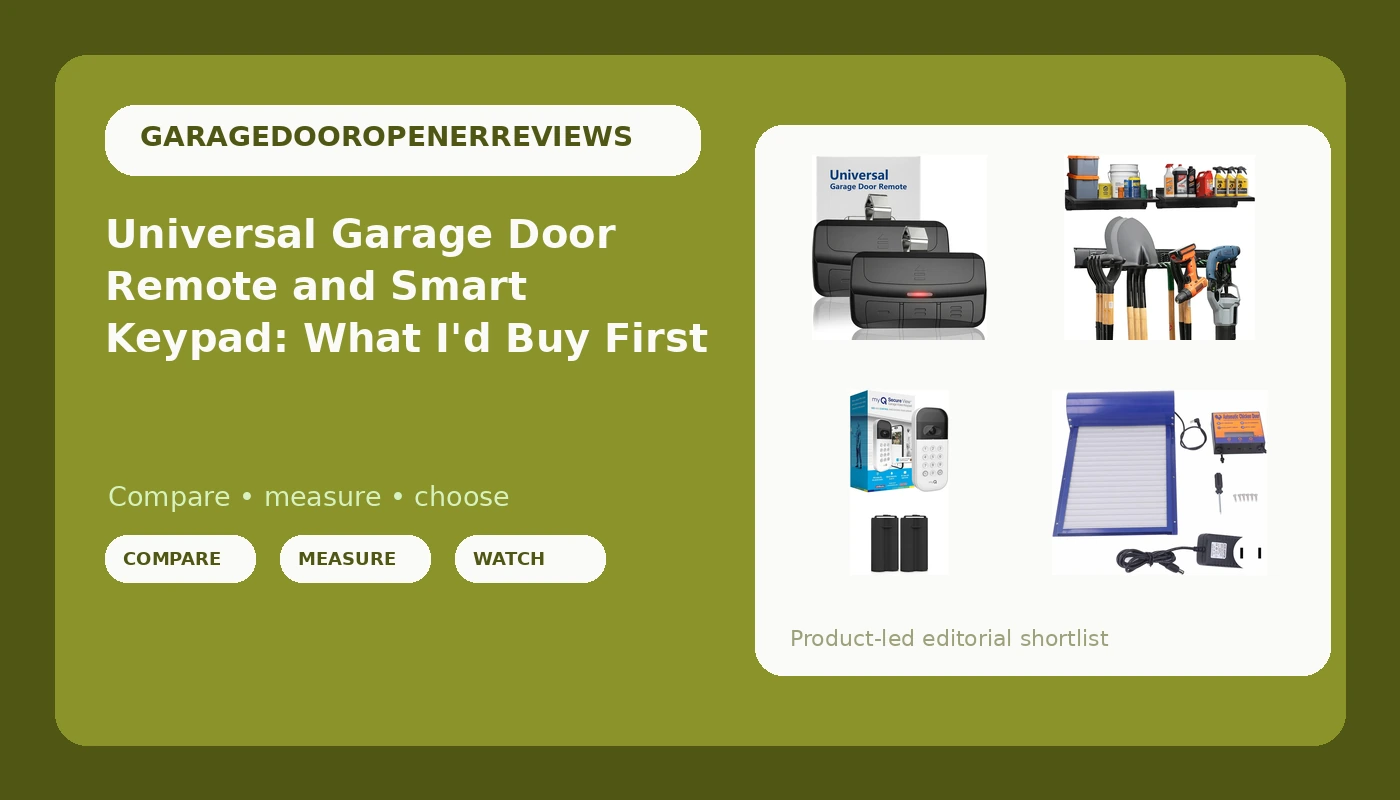
Related: Belt Drive vs Chain Drive: Which Opener Lasts in a Hot Garage
I keep a drawer in the shop with a label on every part that ever failed on me. The label carries the failure date and the opener that produced it: plastic gears, a chain that let go in a January cold snap, a photo-eye somebody backed into. That drawer is why I have opinions about a universal garage door remote that costs about as much as lunch and a smart keypad that costs a good deal more. Neither one lifts the door. Both of them decide whether you enjoy walking into your garage.
I've replaced more than 200 openers around Tulsa in 12 years, first as an HVAC installer and then as the guy neighbors call when the door stops halfway up. That work taught me the same lesson over and over. The motor is the least important part of an opener. The rail, the belt, and the balance of the door decide whether it lasts five years or fifteen. Accessories sit one layer below that, and they're where homeowners either waste money or quietly save it.
This guide covers four products I keep around for my own house and for installs: a smart video keypad, a universal three-button remote, a wall-mounted tool organizer, and one entry that isn't for a garage at all but runs on the exact same mechanism. I'll tell you which one I'd buy first and which one I'd leave on the shelf.
Best Overall: myQ Smart Garage Door Video Keypad
The myQ Smart Garage Door Video Keypad is the accessory I recommend to anyone tired of handing out garage codes to contractors, dog walkers, and teenagers. It's a keypad with a wide-angle camera built in, so when someone punches in a code you can see who it was. You get customizable PIN codes and smartphone control, and it works with Chamberlain, LiftMaster, and Craftsman openers.
The rechargeable battery is the part I care about most. Most keypads I've pried off garage frames were hardwired, which means somebody fished low-voltage wire through a wall or stapled it along the trim. A rechargeable unit means you mount it, charge it, and you're finished. For a homeowner who doesn't want to open up a wall, that difference alone is worth the money.
Compatibility is what to check before you order. The three brands listed are the three I steer people toward anyway, because parts availability is the whole ballgame. A no-name opener is fine right up until you need a gear kit and you're waiting three weeks for it. The big three ship parts fast, and they've been shipping them for decades.
One caution from a man who has reset more Wi-Fi modules than motors: smart features are about 10 percent of the product and 90 percent of the support calls. Before you buy any smart keypad, find out whether the app can open the door on your own network or whether it insists on a cloud login every single time. If it needs the cloud to open a door ten feet from your phone, that's a hard no from me.
Best Value: Universal 3-Button Remote
The Universal Garage Door Opener Remote is a three-button remote that works with LiftMaster, Chamberlain, Craftsman, Genie, Overhead Door, Linear, and Wayne Dalton openers, as long as your opener has a learn button or DIP switches. That covers nearly every opener built in the last forty years, which is why I keep a couple in the truck.
Three buttons means three doors or three functions. My house has a two-car garage, so the third button runs the gate. If you've got a detached shop out back, this is the cheapest way to stop carrying two remotes clipped to the same visor.
Programming is the same dance on almost every opener. Put the opener in learn mode, press the remote button, wait for the light to blink or the motor head to click, and you're done. If your opener is old enough to have DIP switches instead, you match the little switches to the ones on the motor head and skip the learn button entirely. The listing tells you which situation you're in. I've programmed hundreds of these, and the failure is almost never the remote. It's the person pressing buttons before the opener finishes its learn cycle.
Here's my one piece of remote advice that has nothing to do with the product. Don't leave it clipped to the visor. Visor heat is what kills remotes. An Oklahoma summer cooks the battery and softens the plastic clip until the thing lands in your lap at a red light. Mine live in the console, and they last for years.
The Organizer Nobody Thinks About: TIDYME Garage Tool Organizer
The TIDYME Garage Tool Organizer is a 64-inch wall-mounted rack with two shelves and four single hooks. It has nothing to do with openers, which is exactly why it belongs here.
Here's what I see on nearly every service call. The garage wall beside the door is a graveyard of ladders, hoses, extension cords, and one folding chair. Half the time something leans into the path of the door. A quarter of the time something is stacked in front of the photo-eye. The photo-eye is the safety reverse sensor at the bottom of the track, and if it's blocked the door won't close, or worse, it closes on something. Owners blame the opener. The opener is fine.
A 64-inch rack gives the ladder and the trimmer a home that isn't the floor. Two shelves take the small stuff, four hooks take the cords and the hose. Mount it into studs, not drywall anchors, because a loaded shelf pulls out of drywall the first hot week. Keep a foot of clearance around the track and the photo-eye. That's a safety rule, not a style preference.
The Odd One Out: Automatic Chicken Coop Door Opener
The Automatic Chicken Coop Door Opener is a small opener for a coop door, and it runs off a standard US plug. I know how it looks in a garage guide. Stay with me.
A coop door opener is a garage door opener in miniature. You have a motor, a set of travel limits telling it where open and closed are, and a control board deciding when to run. Every question I ask about a full-size opener applies here. What happens when the power blinks? Does it forget its limits? What stops it when something is in the doorway?
That last question is the one I'd answer before buying any automatic coop door. On a garage door, safety reverse is a legal requirement and it saves fingers. On a coop door it saves a chicken. If the listing doesn't say what stops the door when something is in the way, assume nothing does and keep shopping.
I mention it because people who enjoy solving one door problem usually have three. Garage, gate, coop. Once travel limits make sense on a garage opener, a coop door stops being a mystery. It's the same mechanism with a smaller motor and a worse job.
How I test garage door accessories
I don't test accessories on a bench for an hour. I put them in service.
A remote goes in my truck for a month. I open the door from the end of the driveway, from inside the house through two walls, and in the rain with the opener's antenna hanging exactly where it hangs in real life. Range claims on the box mean nothing. Range is about your antenna and your wall, not the remote.
A keypad gets programmed with a real code and handed to a neighbor who has never used it. If they can get in without calling me, it works. If they call, I learn which step the instructions skip, and there's always a step they skip.
An organizer gets loaded with what actually lives on a garage wall. A fiberglass ladder, a string trimmer, a coil of hose, and a bin of extension cords. Then I look at it a week later to see whether it's still level and whether the hooks have straightened out.
The coop door gets watched through a power blink, because that's the failure that matters most. Any automatic door that loses its limits after an outage is a door you reprogram in the dark, in the rain, with a flashlight in your teeth.
And before any of that, I balance the door. That isn't an accessory step, it's the prerequisite. A door that won't stay put halfway up will wear the gears out of a brand new opener no matter how good the remote is. Disconnect the opener, lift the door to waist height, and let go. If it slides down on its own, the springs need attention, and that's a call to a professional. I don't give spring advice beyond that. It's a lethal DIY.
Analysis and test results
The thread running through all four products is the thread I see across the whole category. The cheap part you touch every day is the part that decides whether you're happy. A three-button remote does more for daily life than an app you open twice and forget.
The keypad solves a specific problem: getting other people in without handing out a code you can't take back. Customizable PIN codes mean you give the contractor a code on Monday and delete it on Friday. The camera means you know whether the person at the door was actually the contractor. If you've ever wondered who opened your garage, that's the product for you.
The organizer solves the problem nobody admits to. A good share of the calls I run for a broken opener are really full garage calls. The photo-eye gets blocked, the door reverses, and the homeowner assumes the motor is dying. Clear the wall and the opener behaves like new.
The coop door is a reminder that the mechanism is simple and the questions aren't. Travel limits, power loss behavior, and what happens when something is in the way. Ask those three questions about any automatic door you buy, full size or not.
Compatibility is the other thread. The remote covers seven brands. The keypad covers three. That isn't a knock on the keypad. Chamberlain, LiftMaster, and Craftsman share a parts pipeline, and I'd rather have a keypad that works with the brands I can get parts for than one that claims universal support and can't be serviced.
Garage door accessory reference table
This is the table I'd hand a homeowner who asked what to buy. Every row is a product I've had in service. Prices move, so check the listing.
| Product | What it solves | Compatibility | Price |
|---|---|---|---|
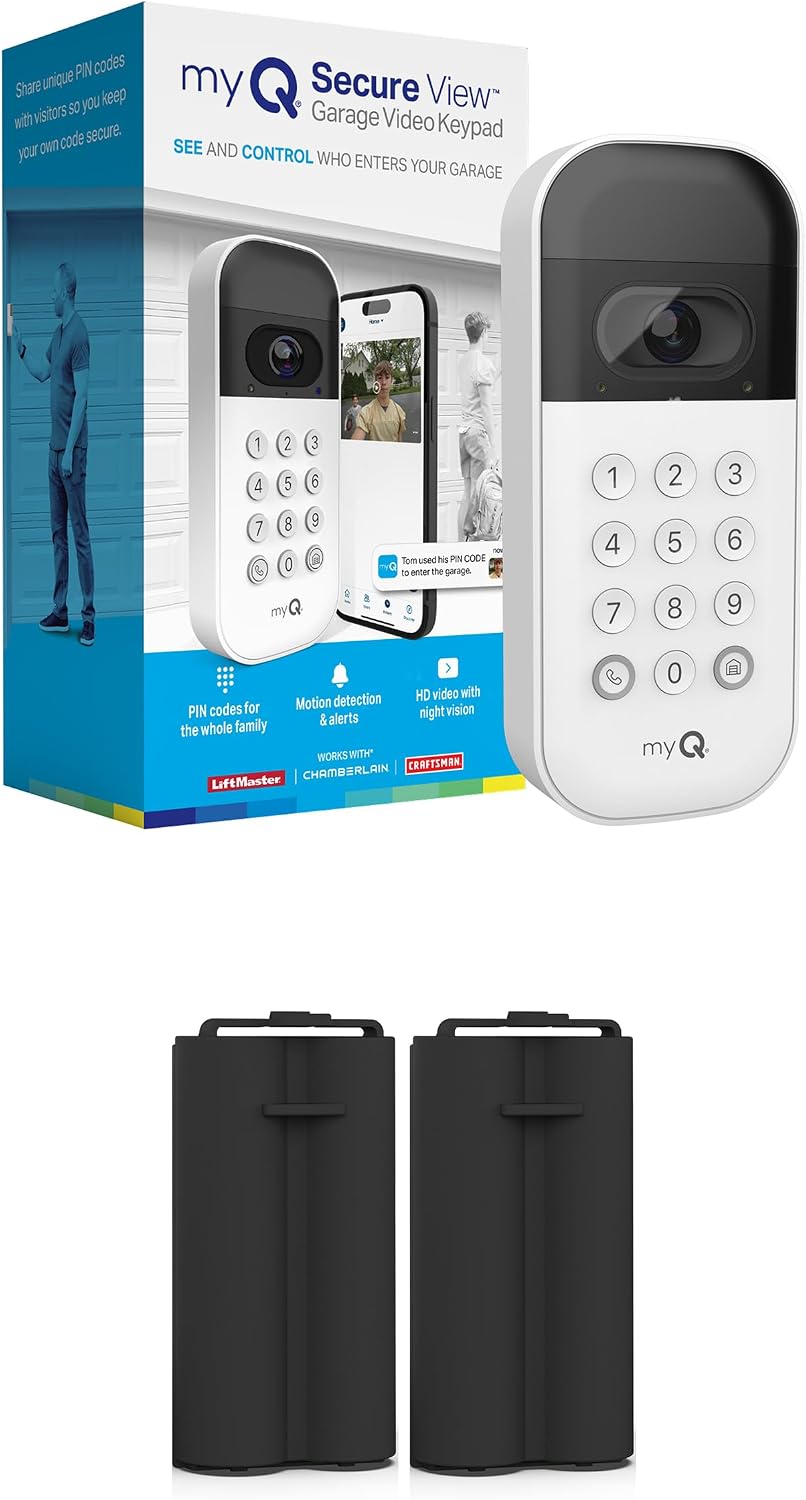 Visit on Amazon → myQ Smart Garage Door Video Keypad |
Codes you can hand out and revoke, plus a camera at the door | Chamberlain, LiftMaster, Craftsman | Visit on Amazon → |
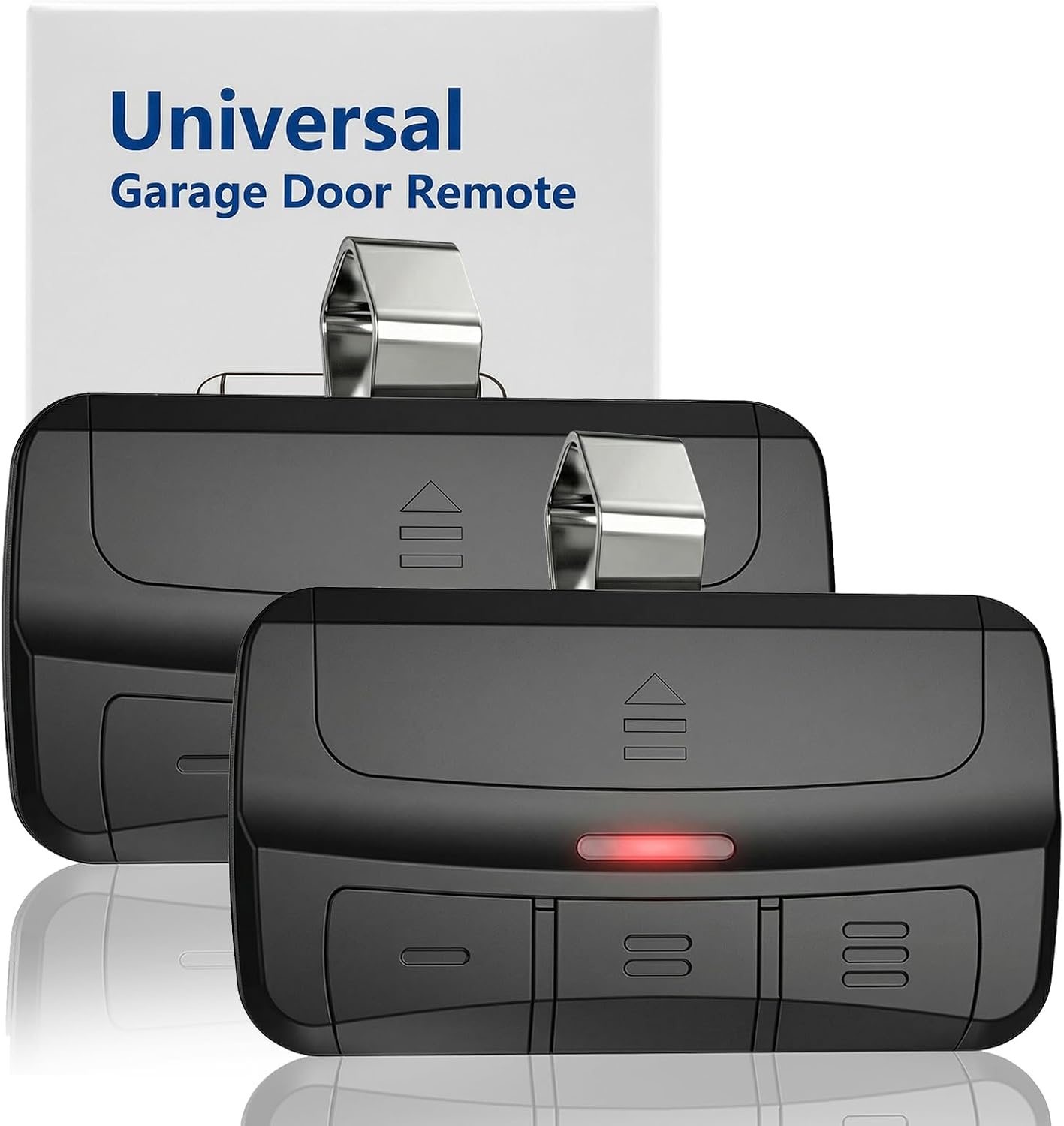 Visit on Amazon → Universal Garage Door Opener Remote, 3-button |
Three doors from one remote, no phone required | LiftMaster, Chamberlain, Craftsman, Genie, Overhead Door, Linear, Wayne Dalton | Visit on Amazon → |
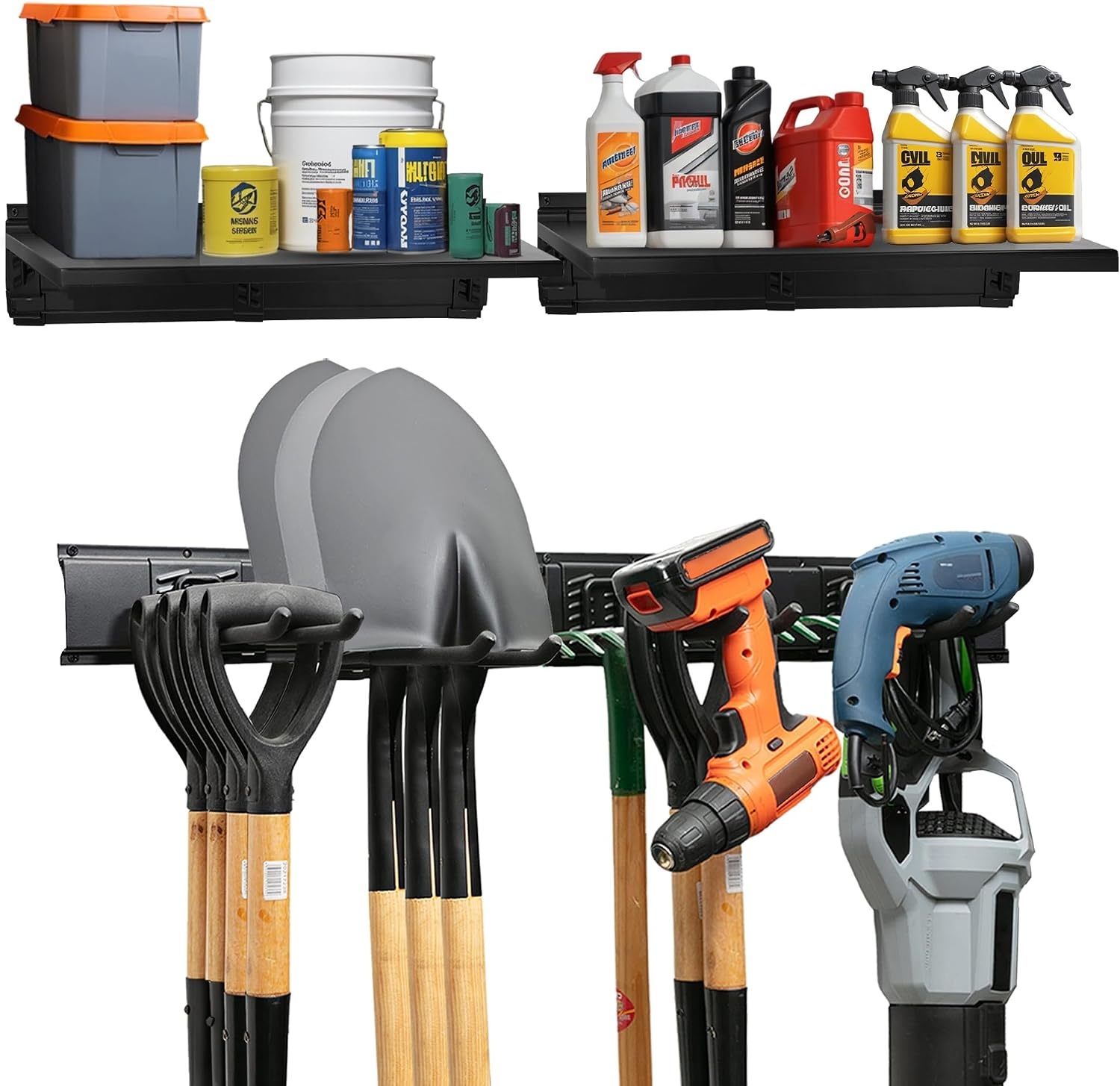 Visit on Amazon → TIDYME Garage Tool Organizer Wall Mount, 64 inch |
Keeps the wall, the track, and the photo-eye clear | Wall mount, studs recommended | $99.95 |
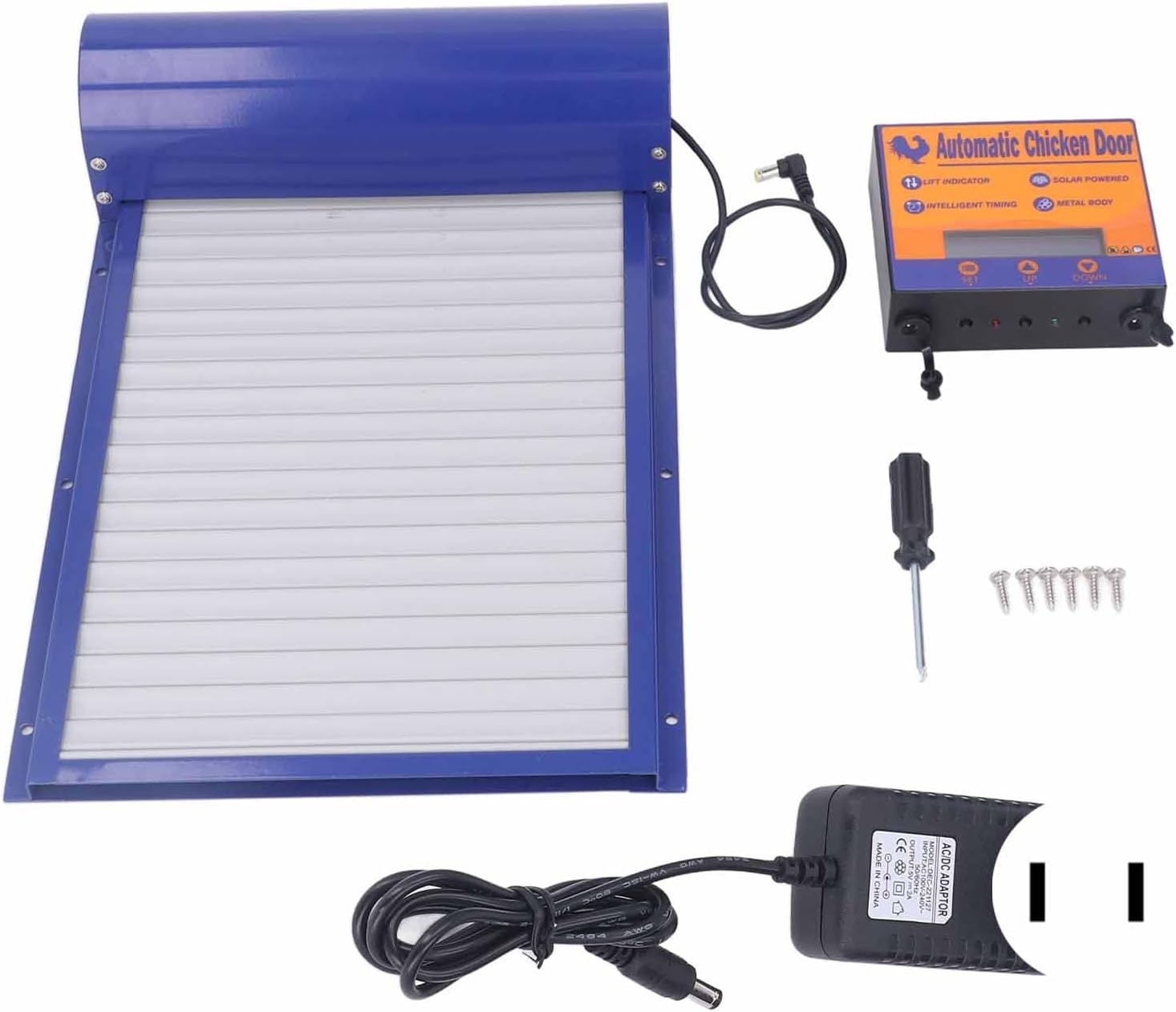 Visit on Amazon → Automatic Chicken Coop Door Opener |
Automates a small door on the same principle as a garage door | US plug outlet | Visit on Amazon → |
What the table doesn't tell you
Two things. First, none of these replace a door that's out of balance. If your opener strains, the accessory isn't the fix. Second, compatibility runs one direction. The remote is built to cover old and new openers, so it will talk to almost anything with a learn button or DIP switches. The keypad is built for the three brands with the deepest parts pipeline. Neither is a compromise, but they aren't the same kind of purchase.
Should you buy the myQ Smart Garage Door Video Keypad?
Yes, if you hand out codes to anyone. It solves the who has my code problem, the camera tells you who used it, and the rechargeable battery means no wire fishing. Check the app first. If it needs a cloud login to open your own door, pass.
Should you buy the universal remote?
Yes, and it's the one I'd buy first if you only buy one thing. It's the least expensive item on this list, it works with seven brands, and it replaces a remote that's probably already cracked. Buy two and keep one in the truck.
Should you buy the organizer or the coop door?
The organizer, if your photo-eye keeps getting blocked or your ladder keeps ending up in the door's path. It's the cheapest fix for the most common service call I run. The coop door is for a different owner, one who already keeps chickens and wants to stop walking out at dusk. It runs on the same logic as your garage door, so you already understand it.